“Music is a world within itself, with a language we all understand.” — Stevie Wonder
After twenty-five years in the classroom, people sometimes assume I’ve seen it all. Or that by now, I’ve found the “perfect” set of assignments and could essentially teach on autopilot. But that has never been my philosophy. If anything, the longer I teach, the more deeply I believe that students deserve learning experiences that feel relevant, meaningful, and connected to the world they actually live in.
Every year, I challenge myself to rethink at least one beloved old assignment. To twist it, stretch it, or flip it into something that sparks curiosity in a new way. This fall, it happened with one of my favorites: the Song Analysis Project. Normally, students choose a song they love and dig into the lyrics, context, and cultural impact. It’s engaging, sure, but I kept wondering if I could push them toward something deeper.
And then an idea hit me: What if they analyzed music not from their generation, but from their parents’?
Suddenly, the assignment became something richer than just literary analysis. It became a bridge.
The Generational Music Study: A Twist on a Classic
I introduced the project by telling students they would analyze a song that was popular when their parent, or guardian, was in 11th grade. The same age they are now.
The reactions were priceless. Raised eyebrows. Nervous laughter. Groans of “My mom listens to weird stuff.” And of course: “Does this mean I have to talk to my parents?”
Yes. Yes, it does.
Because at its heart, the assignment isn’t just about music literacy. It’s about opening up conversations that might not happen otherwise.
Teenagers don’t always ask their parents what they listened to at 16 (or why a certain band or lyric meant something to them). But that’s where the learning takes place. When students start researching the time period, the social climate, the artist’s background, and the cultural movements attached to a song, they begin to see their parents not just as adults, but as former teenagers with hopes, fears, identities, and soundtracks of their own.
Those connections matter.
An Assignment with Purpose
The project aligns beautifully with many learning targets: examining how personal experience shapes understanding, interpreting multimedia texts through cultural and critical lenses, and recognizing how media reflects the world that produces it. Music is one of the purest examples of that.
But the magic of this assignment isn’t in the standards. It’s in the conversations we had.
Those moments remind me why I keep reinventing my classroom year after year.
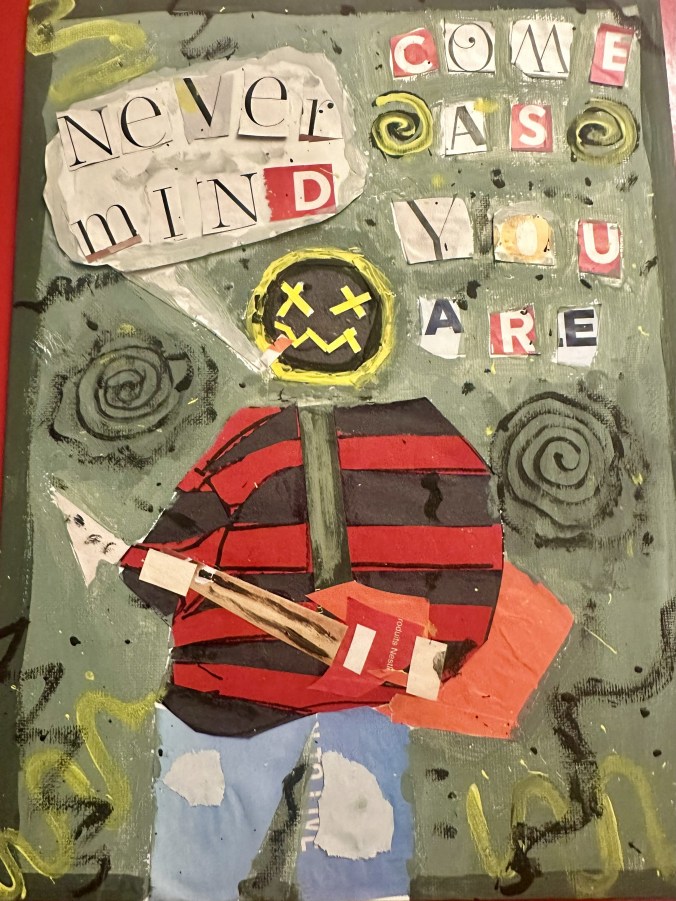
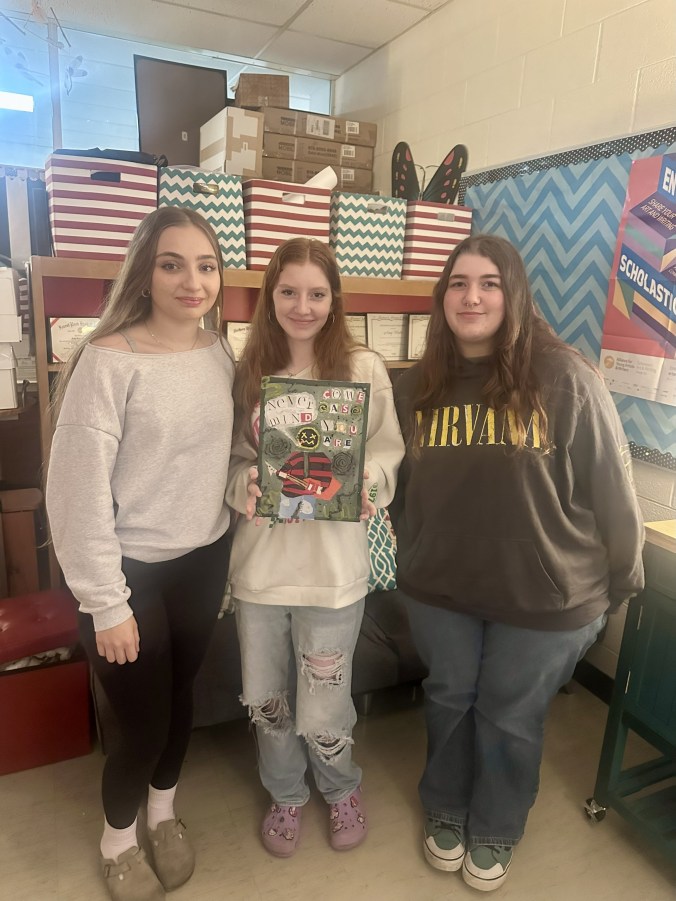
One of my students, Lilia, created this incredible “Album Cover” visual to go along with her presentation. She definitely brought me back to my college days when Nirvana hit the music scene in the 90s.
What Students Actually Do
The academic side is still robust. Students research:
The song’s origins, meaning, and songwriter intent
The cultural and political climate of its release
The artist’s background and influences
Line-by-line interpretations
The song’s intended audience
Its impact on charts, culture, or later musicians
They can also compare the song to one from today, design a visual representation, interview a family member, or create multimedia presentations.
But underneath all of that is something more human: Students are exploring how music helps people make sense of their world. Also, how the same age, in a different generation, can look and feel both familiar and completely different.
Why I’ll Keep Reinventing
The world changes, students change, and so should we.
This Generational Music Study leads to authentic conversations. Students aren’t just learning about metaphor or historical context. They are also learning about the people who raise them, the world that shaped those people, and the power of music to connect generations in ways words alone sometimes can’t.
At the end of the day, that’s why I keep trying new things. Because when students discover that learning can connect them to their families, their histories, and themselves. That’s when teaching still feels brand new.
And after twenty-five years, and several more to go, that’s a feeling worth chasing.
*If you are a teacher and want to know more about this assignment, email me at: amy.waldo@gwinnschools.org
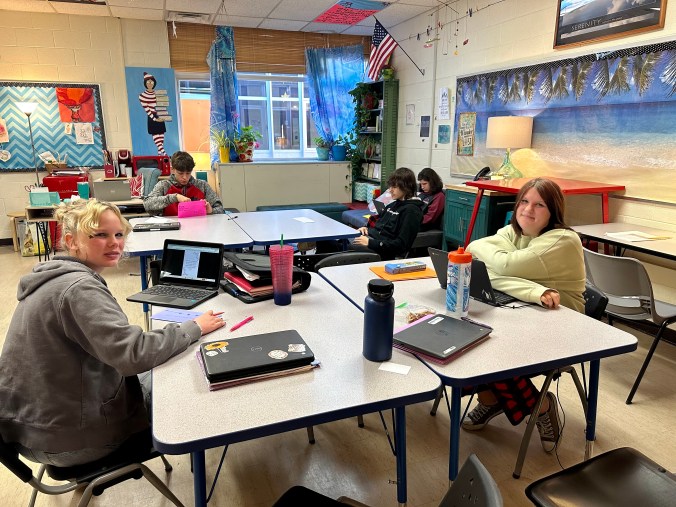
Three of the reasons why I love my job so much: Ruby, Lilia, and Lila
“Together, we all play a role in being change agents to make our world better.” ― Germany Kent
If you read my last blog post, you know that my 9th grade English students spent over a month brainstorming, composing, editing, and polishing up their persuasive writing skills by sending Outrageous Request Letters. They have been in the mail for a little under a month and I confess to obsessively checking my mailbox in the office multiple times per day hoping for responses.
Drumroll please….the first Outrageous Request Letter of the year was granted!
Miss Lila Eagle, wrote to Lakeshore Learning in hopes of receiving 20 wobble stools for her mom, Daniela Eagle’s, classroom. After being a parapro and substitute teacher for ten years, Daniela went back to college to get her teaching certificate and this year was hired to be a special education teacher at GMHS.
Lila wrote the following: “I’m from a small rural town in Upper Michigan called Gwinn, the population of our school district as of 2023 is 1,015. Even though our population is small we have one of the highest rates of students with IEPs or specialized learning plans in the county with 23% of our students having a learning disability. With our school being small we don’t have as much income as other schools in the area leading to us being understaffed and oftentimes we don’t have all of the materials we would like to have…”
“I chose to ask for alternative seating for our classrooms because I think a lot of students would benefit from it. My mom, Daniela Eagle is a Special Ed teacher here at Gwinn and she said that she notices a lot of students not being able to sit still or focus during lessons. With a lot of students with disabilities they can’t focus or they may take longer to do tasks that other students can and need to be moving or fidgeting. With wobble stools students can fidget or keep moving during a lesson and they will be more silent than if they hadn’t had a wobble stool.“
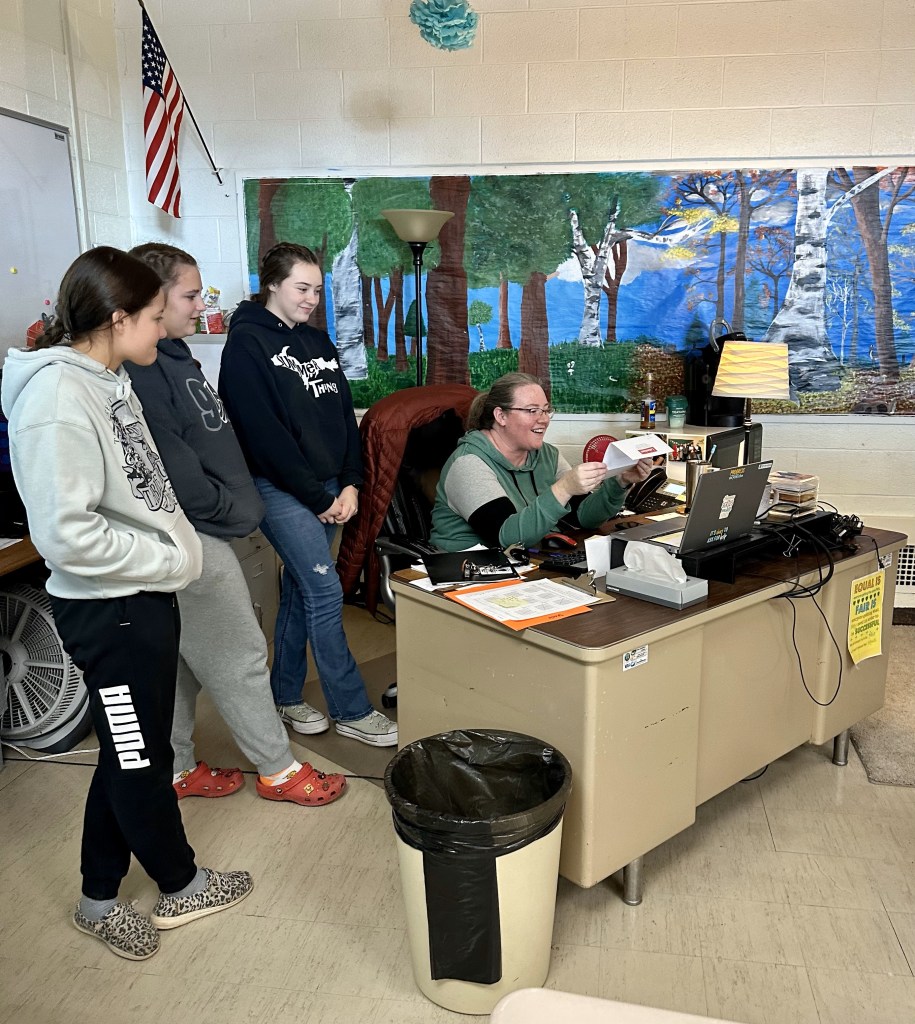
One of my favorite parts of this assignment is mail call. Yesterday at the beginning of the hour I presented Lila with Lakeshore’s letter. The anticipation in the room was tangible as Lila tore open the envelope to read the fantastic news that her wish for 20 wobble stools would be granted. To keep the excitement going, I marched the entire class down to Mrs. Eagle’s room to let her read the letter herself.
As a writing teacher, I cannot imagine a better way to teach students about the power of writing. I hope that Lila feels empowered by this experience. With Lila’s help, students who struggle with sitting still will have alternative seating and will be able to focus on their lessons.
In addition to granting Lila’s request, Lakeshore Learning’s response included the following feedback, “Mr. Kaplan recently reviewed your letter and was very impressed with how much thought you put into your assignment and how well you presented your request. Very persuasive indeed… You have a very bright future and we at Lakeshore wish you continued success.”
I love this photo! What a thrill it was to capture this “Proud Mom and Proud Daughter” moment.
Thank you Lakeshore Learning for giving a hand up to our district and for providing me with the priceless opportunity to teach my students that our words and writing matters. Congratulations, Lila, on using your voice to make your community a better place!
My fingers are crossed for more updates in the coming days. I love my job and I love my students. ❤
“After nourishment, shelter, and companionship, stories are the thing we need most in the world.” — Philip Pullma
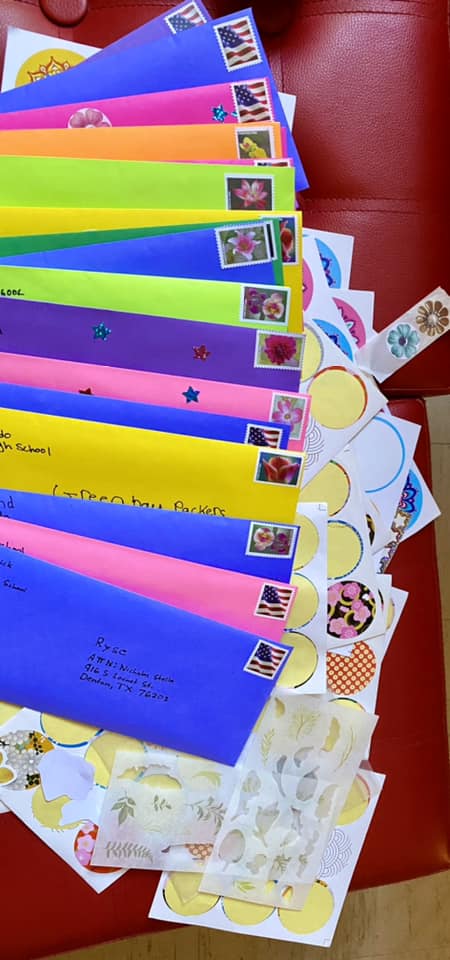
My students love to choose brightly colored envelopes to mail their letters.
It is the most wonderful time of the year. My 9th grade students’ Outrageous Request Letters hit the mailbox yesterday!
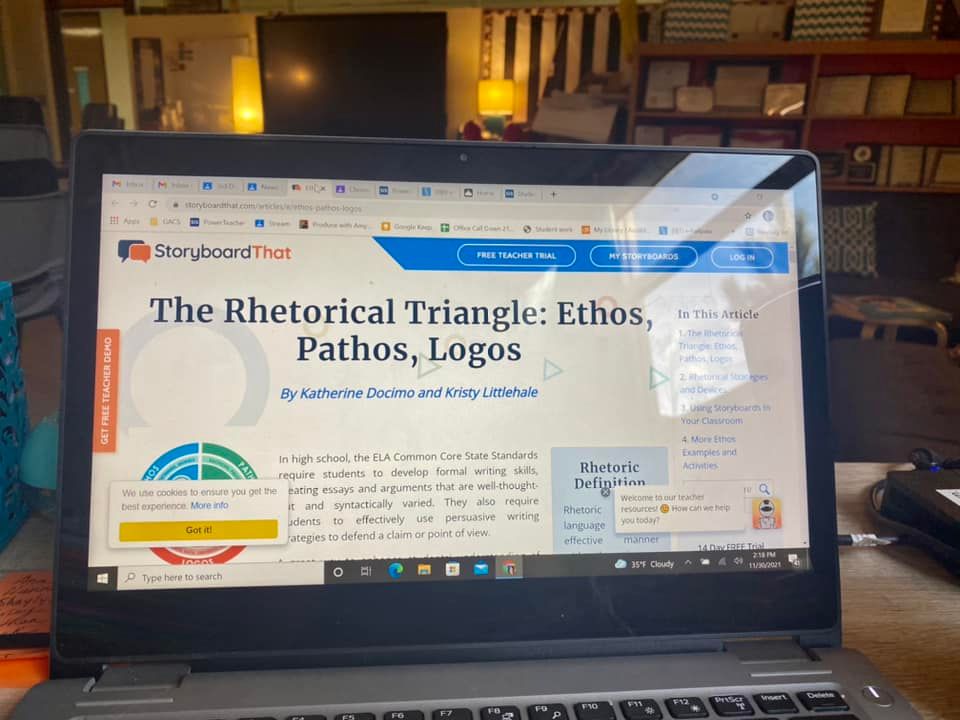
We discussed persuasive writing techniques using the Rhetorical Triangle: Ethos, Pathos, Logos , I reinforced the writing process by having them brainstorm, research, write 3-4 drafts (after I give feedback on each draft), and learn how to address an envelope. It truly takes grit and constant reminders to convince 14 and 15 year olds to use spell check, to revise, and the addressing-the-envelope part can be a true test of teacher patience.
However, reading the final version of their letters is a pleasure. Some make me laugh and others make me misty eyed.
This is another project made more exciting by the generosity of those who support my classroom via Donors Choose. The bright colorful envelopes, stickers, stamps, and even stationery for those who want to handwrite their requests. Thank you to my family and friends who donate and help make this project more magical. (*Note – never underestimate the power of stickers on teenagers. They LOVE stickers 🙂 )
I promise to keep you posted on requests that are granted. We’ve had some incredible ones over the years: $3,500 from Kohls for a local foster care agency, close to $6,000 of products from Wahl for a local barbershop, and $1,000 from Meijer for a local bike club. Plus, tons of other items for students and their loved ones.
Most of all, the takeaway that I want my students to glean from the assignment is that their words, their writing, and their stories matter.
(See below for media posts about some of the Outrageous Requests that have been granted.)
The 2023-2024 school year marks my 23rd year of teaching 9th grade English. My guiding philosophy behind why I do what I do is that I want to be an encourager of stories. I want my students to know that their voices and their stories matter.
In the early years of my teaching career, I found an article about a teacher who challenged their students to write letters asking companies and celebrities to grant an “Outrageous Request”. I guided my students through the assignment for several years and we received many responses. However, I let the assignment fall to the wayside.
One year I brought the “Outrageous Request Letter” back to my classroom. I decided that I could incorporate elements of persuasive writing into the lesson using the Rhetorical Triangle (Ethos, Pathos, and Logos). Not only would these writing elements help my students persuade others to grant their requests, but this methodology would help prepare them for the SAT Essay that they take their junior year.
I love that I can check off so many standards/benchmarks with this assignment. Not to mention that the students get really excited to send their letters off. I often reflect on the fact that I am “tricking them into learning” since writing a letter where their wildest wishes may be answered is so much more interesting for them than writing a standard essay.
Not only does this assignment help them understand the Rhetorical Triangle, but it also teaches:
*Revision (my students write 3-4 drafts of their letter) *Addressing an envelope (something many of my students have never done) *Writing for a “real world audience” (they love that someone will actually receive their letter, open it, and read it) *Ponder a counter-argument to their request (important for persuastive writing) *Internet research (for various aspects of Ethos, Pathos, and Logo and to do preliminary research on who they are writing to) *Defies the stereotypical narrative that teenagers are buried in their phones and only care about themselves. They are insightful, creative, and can be agents of change when given the proper avenue.
While I tell my students that it is okay for them to ask for something for themselves, I do not introduce the assignment as an opportunity to “get free things” In fact, I celebrate the assignment as a way to help others. We engage in conversations about their community and needs that others may have. When I encourage my students to contemplate their community we discuss how broad their community truly is: family, friends, GACS (teachers, support staff, administrators, coaches, students), organizations they are part of such as youth group, sports, etc, the town they live in, and Marquette County as a whole.
I do not allow students to write to local businesses since they already sponsor so many school activities. I try to get my students to think outside the box and imagine things that maybe are not tangible – experiences and opportunities.
I could write a long list of items that students have received over the years. Their persuasive writing skills have gathered: art supplies, snacks, clothing, a snowboard, cheerleading mats, winter boots, shoes, services of a private investigator, and so much more.
This assignment has afforded me the opportunity to suprise my students and these unveilings have been major highlights in my teaching career.
Ultimately, as a writer and English teacher, I want my students to glean from this assignment how powerful our stories are and that our voices and words matter. Being able to communicate clearly is vital to our role as humans. This assignment is an evocative way to demonstrate the power of writing! I love being an encourager and guide. I love my career and I love my students.
*If you are a teacher and want more information about the Outrageous Letter Request assignment, contact me at amy.waldo@gwinnschools.org
“We write to taste life twice, in the moment and in retrospect.” ― Anais Nin
As a writing teacher, one of my mantras is that our writing is a time capsule. I encourage my young writers to use their writing as a tool to reflect on their personal and academic growth. I am always looking for ways to help my students publish their work. Whether it is hanging their poems outside the door of my classroom, finding writing contests for them to enter, or assigning digital compositions that can be widely shared on social media platforms.
However, for many of my students, creating a piece of digital writing can be intimidating. So I came up with an idea to start small. We start by writing a “story” that is exactly one-hundred words long. Before I even assign the digital component, I give them a list of prompts and tell them to choose one and write a piece that is one-hundred words long.
Prompts: Acorn Sewing a quilt Tangerine (lip gloss, curtains, tea, Cadillac) Mason Jar Lightening bugs An object you could not live without What voice do I use to be heard? Monarch butterfly Ice etched window pane Geraniums Unplugged Map Fishing A place where a memory hides/sleeps/waits A favorite sound (last school bell, ocean waves, baby giggling, popcorn) Poetic graffiti Making a fist Wearing a key around the neck Word sprout Three ring binder Pumpkin Unplug Sewing a quilt Hiding place Postage stamp Wrist watch Cappuccino Dirty window or mirror Spark plugs Popcorn Gingerbread house Chocolate milk Alphabet Writing to make sense of the world. Riddle Carburetor Fishing lure Northern Lights Tent Baking bread Five subject notebook You are the hero of your own story What makes me feel alive
After my students have written a story or poem, I give them the digital assignment (along with showing them student samples). They may use the piece that they composed with the prompts that I gave them, or they may choose another theme.
I tell them, “Just like the fact that we all have twenty-four hours a day and must use our time wisely, you have exactly one-hundred words for this assignment. How will you use yours?“
ASSIGNMENT:
Creative Writing: Waldo ~ Fall 2023 Digital Storytelling 100 Word Story
In flash fiction/non-fiction a writer can whittle down narrative and get to the very heart of the story. Flash Fiction or a Flash Non-Fiction attempts to accomplish a complete story in few words, therefore, the language in the piece must become precise and sparse. When we are forced to write within a 100 word frame every word becomes charged with intention and meaning. By combining flash fiction/non-fiction with the digital genre we can add extra layers of meaning with voice, music, and sound effects. Plus, it’s a great way to publish our writing and share our work with others.
Write a story/prose poem that is EXACTLY 100 words.
Come up with a title that goes beyond 100 Word Story (the title does not count in the 100 word total)
Turn your story into a digital piece by creating a video that goes along with the words.
Your video can be a series of still photos. (If you take images from the internet you must give credit to your sources)
You may partner up with another person to help you create this digital piece (but you each must create your own video). You can work with a friend of family member. If you have someone in your life that plays an instrument, creates artwork, or is digital literate you can ask them to help you. Just make sure that you give them credit for their work.
Over the years I have had much success with this assignment. I would like to share with you Sophia’s story.
Sophia is in the 9th grade and the fact that the background music is her playing the piano and that her dad helped filmed the footage – makes the entire composition even more splendid. Bravo, Sophia! I cannot wait to see what other masterpieces you weave with words, melodies, and images this year. #WeAreGACS
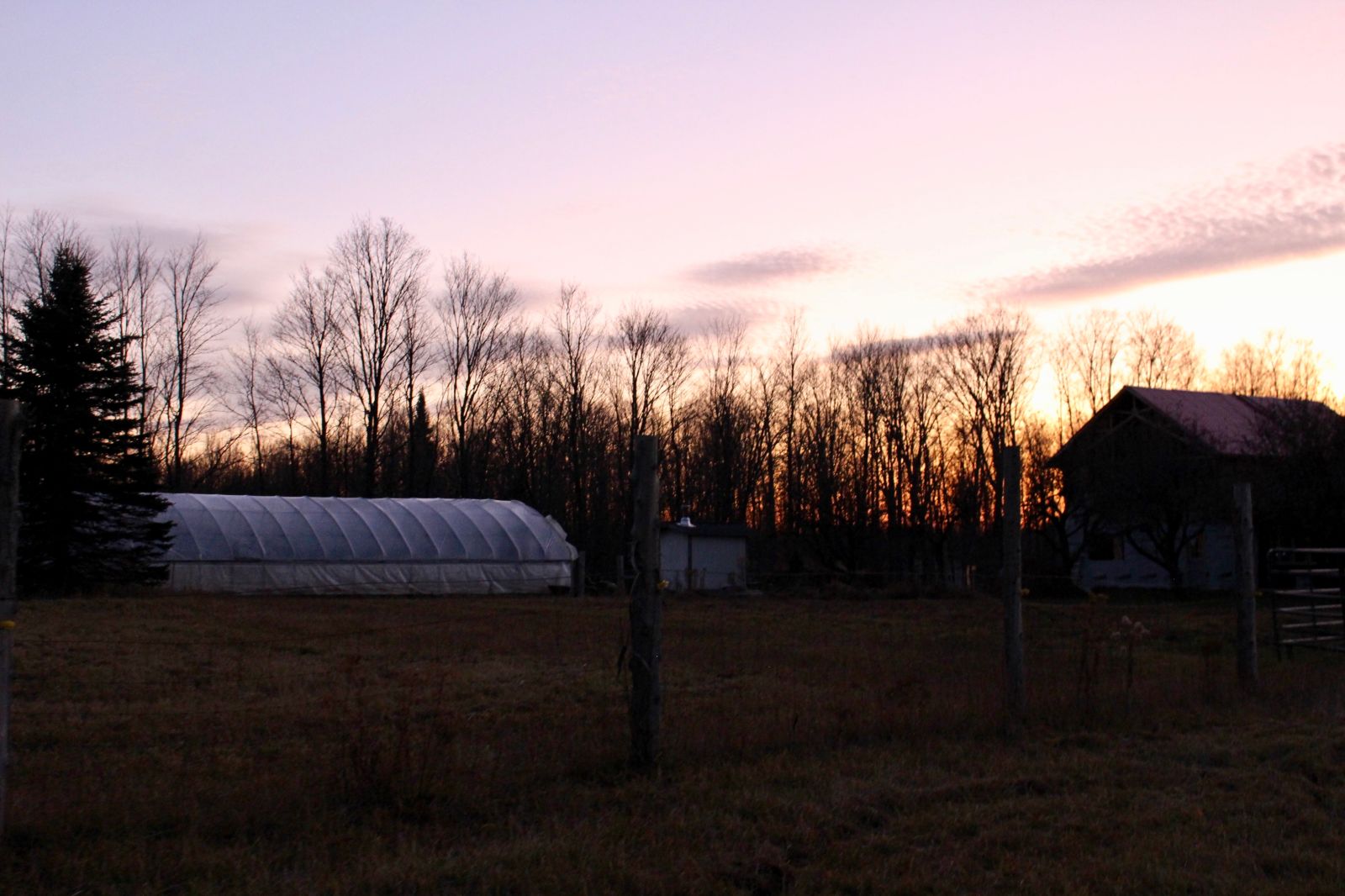
We may not always do things the easy way, but we do them our way! That is what drives us and makes our hearts and souls happy. I am thankful to have found a partner who works so hard for our family. I think that we make a wonderful team and I am excited to see what 2021 brings. I promise to keep you updated on our construction project.
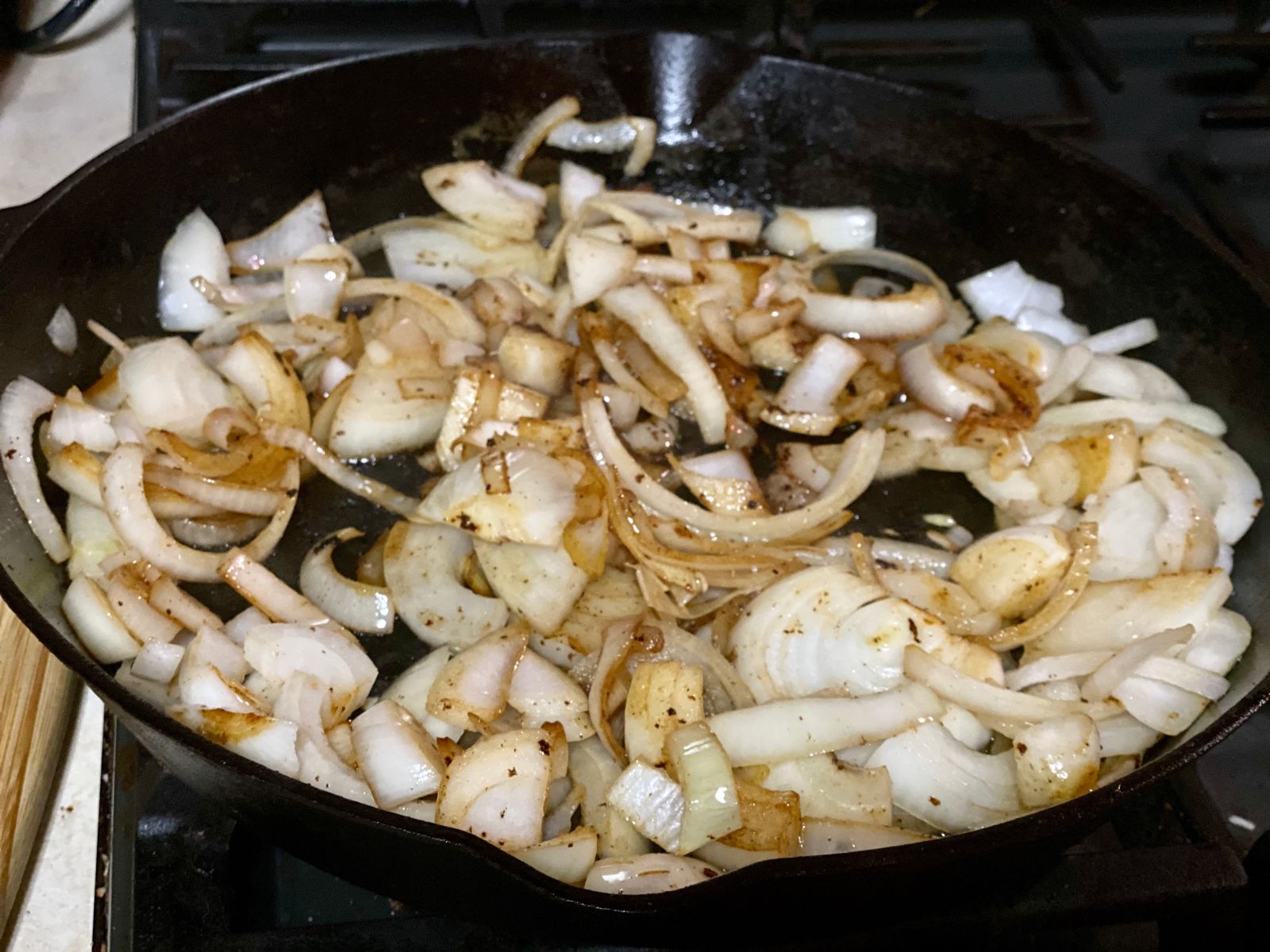
“Winter is the time for comfort, for good food and warmth, for the touch of a friendly hand and for a talk beside the fire: it is the time for home.” ― Edith Sitwell Back in 2014 when I was a vegetarian, I shared a recipe for a plant based French Onion Soup. Since […]
“It begins with a character, usually, and once he stands up on his feet and begins to move, all I can do is trot along behind him with a paper and pencil trying to keep up long enough to put down what he says and does.”
― William Faulkner
There is never a dull moment when you work around, and with, teenagers. After teaching high school for two decades, I honestly cannot imagine doing anything else.
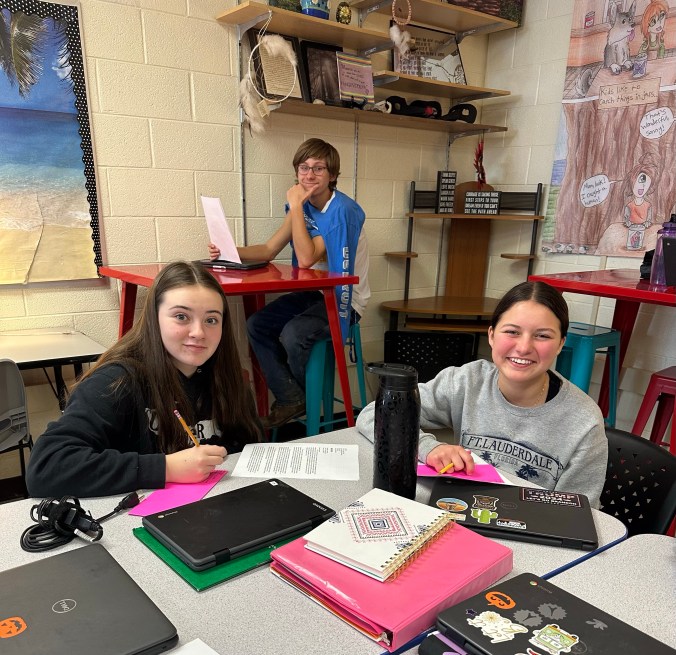
A few years ago I learned an important lesson. Never underestimate the power of stickers when it comes to teenagers. One day my 9th grade students were addressing envelopes to mail letters and I offered them stickers to attach to their envelopes. They were delighted and even the unruliest of students became quiet as they intently selected the perfect sticker combination to decorate their correspondence.
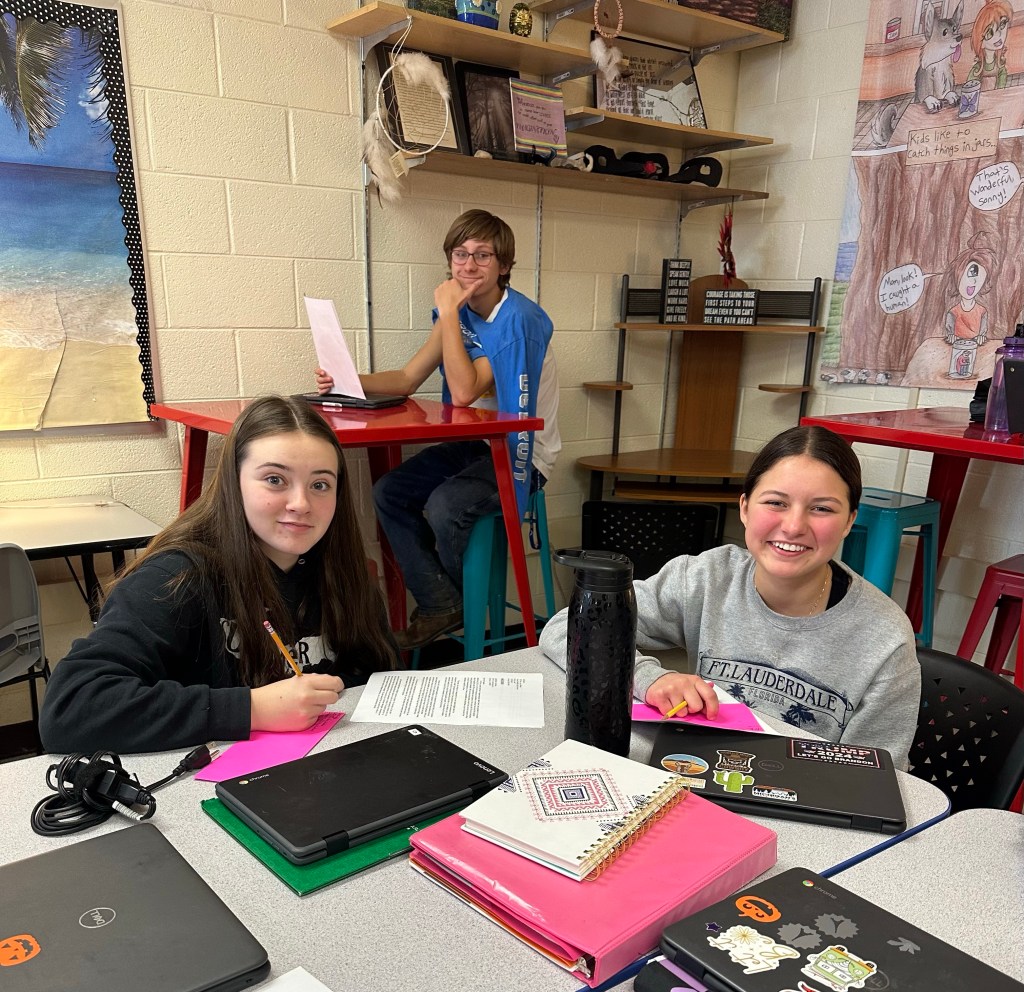
This year I had a Donors Choose project funded that included, you guessed it, stickers. A few weeks ago creative writing students were overjoyed when I offered them stickers to adorn their Chromebooks and/or journals. However, first I made them write.
The following was their prompt on Google Classroom:
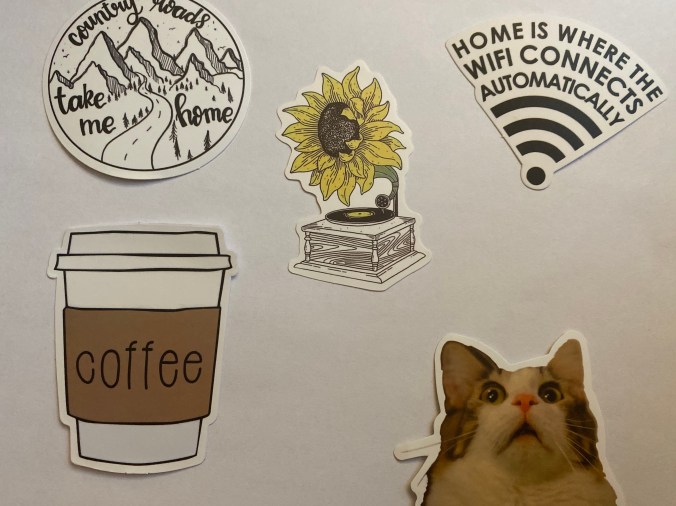
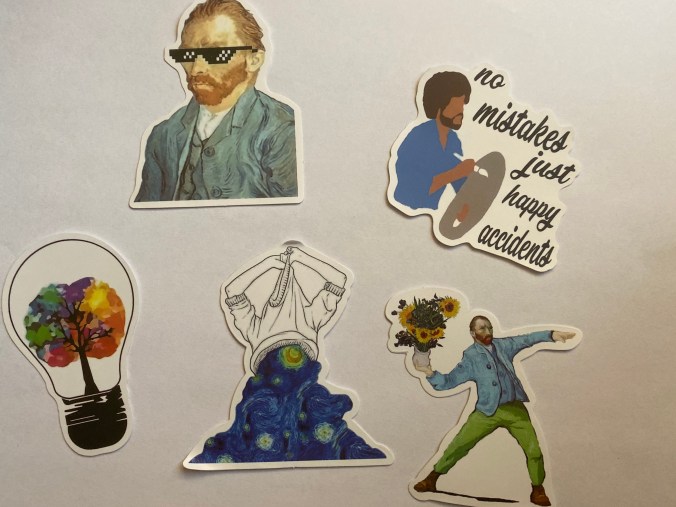
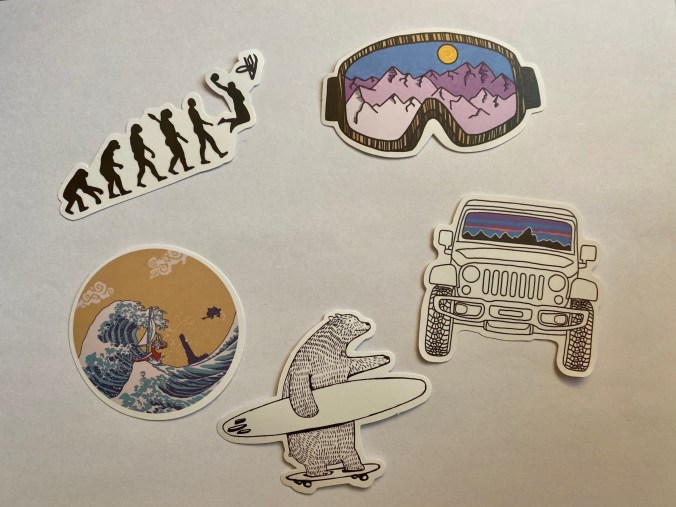
Attached you will find an assortment of images. Choose one of the collections of vinyl stickers and imagine that the stickers are attached to someone’s: computer, water bottle, locker, or another personal belonging. Allow these collection of stickers to tell a story. Imagine what these images say about identity and personality.
I then posted the following images:
The Sweet LifeAll who wander are not lost. Rocket scientist, or bust!Home Sweet HomeStand tall, my dear. Art is life…Adventure Seeker
This prompt works well with students who are visual learners. It provides them with a place to start writing and helps them flesh out a character.
For other teachers reading this, I hope your students enjoy this writing prompt and that it inspires them to be creative. I would love to hear from you in the comment section. As I always tell my students, our words matter.
















 Glitter and Dog Hair