“After nourishment, shelter, and companionship, stories are the thing we need most in the world.” — Philip Pullma
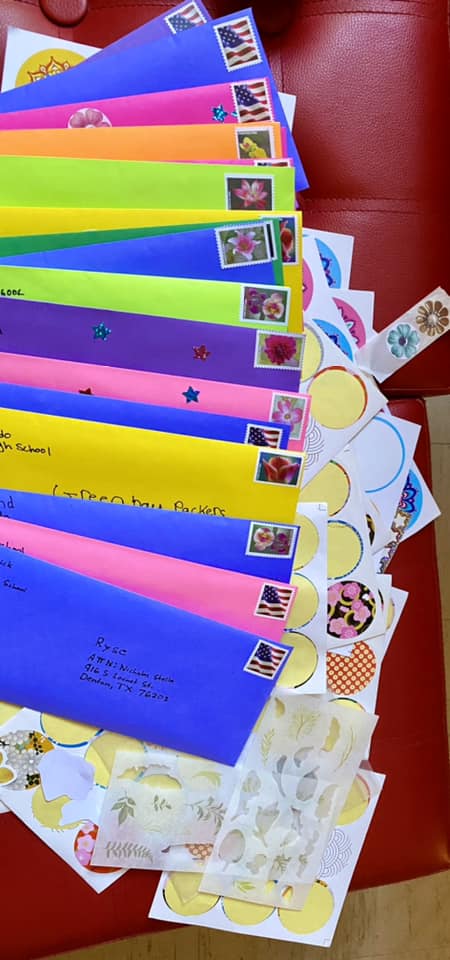
My students love to choose brightly colored envelopes to mail their letters.
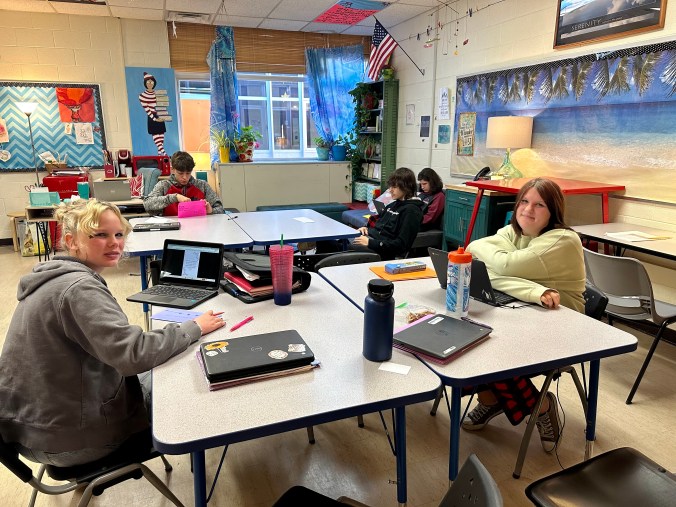
It is the most wonderful time of the year. My 9th grade students’ Outrageous Request Letters hit the mailbox yesterday!
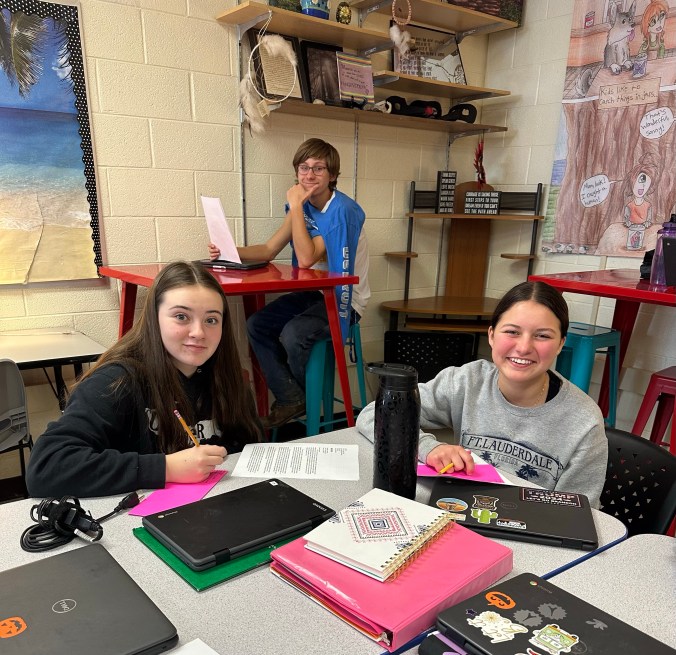
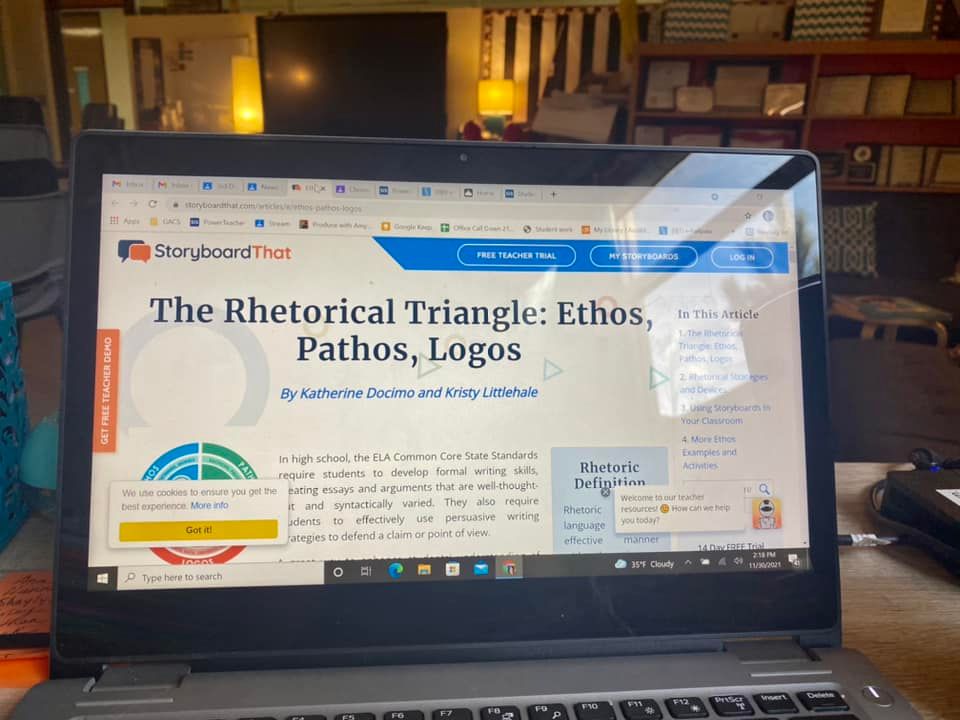
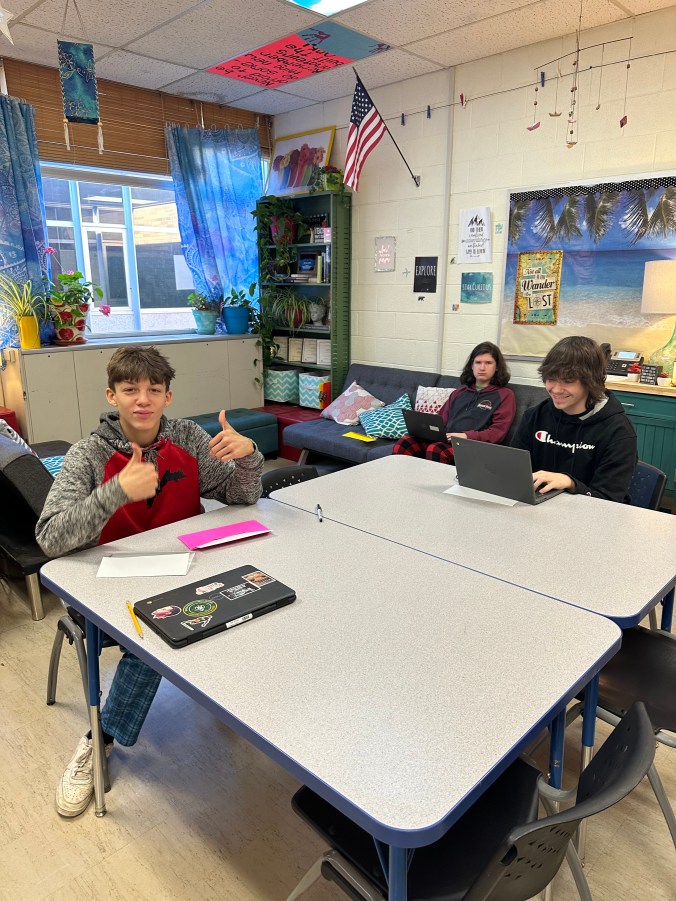
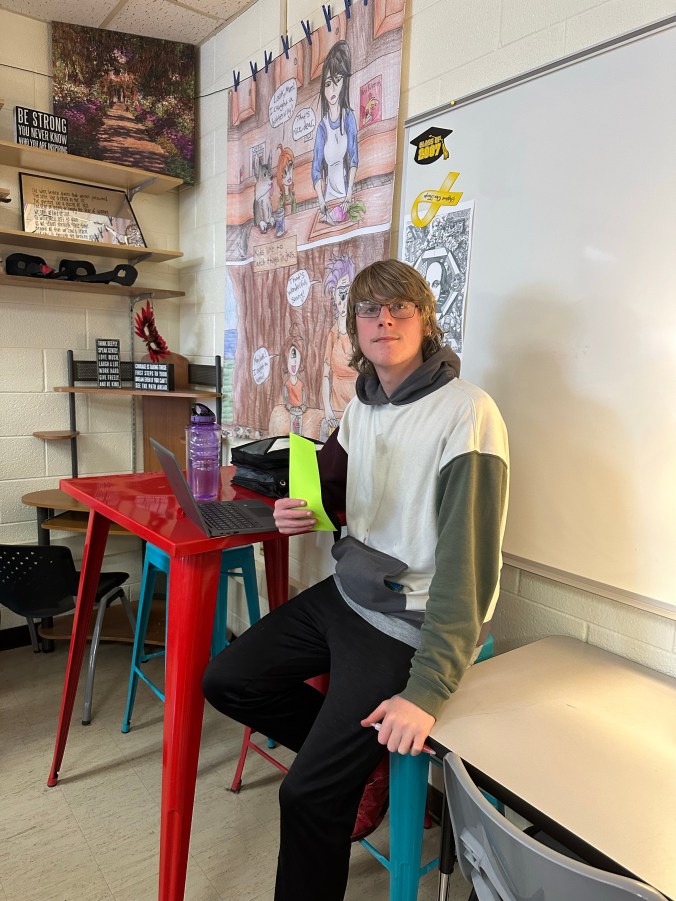
We discussed persuasive writing techniques using the Rhetorical Triangle: Ethos, Pathos, Logos , I reinforced the writing process by having them brainstorm, research, write 3-4 drafts (after I give feedback on each draft), and learn how to address an envelope. It truly takes grit and constant reminders to convince 14 and 15 year olds to use spell check, to revise, and the addressing-the-envelope part can be a true test of teacher patience.
However, reading the final version of their letters is a pleasure. Some make me laugh and others make me misty eyed.
This is another project made more exciting by the generosity of those who support my classroom via Donors Choose. The bright colorful envelopes, stickers, stamps, and even stationery for those who want to handwrite their requests. Thank you to my family and friends who donate and help make this project more magical. (*Note – never underestimate the power of stickers on teenagers. They LOVE stickers 🙂 )
I promise to keep you posted on requests that are granted. We’ve had some incredible ones over the years: $3,500 from Kohls for a local foster care agency, close to $6,000 of products from Wahl for a local barbershop, and $1,000 from Meijer for a local bike club. Plus, tons of other items for students and their loved ones.
Most of all, the takeaway that I want my students to glean from the assignment is that their words, their writing, and their stories matter.
(See below for media posts about some of the Outrageous Requests that have been granted.)
The 2023-2024 school year marks my 23rd year of teaching 9th grade English. My guiding philosophy behind why I do what I do is that I want to be an encourager of stories. I want my students to know that their voices and their stories matter.
In the early years of my teaching career, I found an article about a teacher who challenged their students to write letters asking companies and celebrities to grant an “Outrageous Request”. I guided my students through the assignment for several years and we received many responses. However, I let the assignment fall to the wayside.
One year I brought the “Outrageous Request Letter” back to my classroom. I decided that I could incorporate elements of persuasive writing into the lesson using the Rhetorical Triangle (Ethos, Pathos, and Logos). Not only would these writing elements help my students persuade others to grant their requests, but this methodology would help prepare them for the SAT Essay that they take their junior year.
I love that I can check off so many standards/benchmarks with this assignment. Not to mention that the students get really excited to send their letters off. I often reflect on the fact that I am “tricking them into learning” since writing a letter where their wildest wishes may be answered is so much more interesting for them than writing a standard essay.
Not only does this assignment help them understand the Rhetorical Triangle, but it also teaches:
*Revision (my students write 3-4 drafts of their letter) *Addressing an envelope (something many of my students have never done) *Writing for a “real world audience” (they love that someone will actually receive their letter, open it, and read it) *Ponder a counter-argument to their request (important for persuastive writing) *Internet research (for various aspects of Ethos, Pathos, and Logo and to do preliminary research on who they are writing to) *Defies the stereotypical narrative that teenagers are buried in their phones and only care about themselves. They are insightful, creative, and can be agents of change when given the proper avenue.
While I tell my students that it is okay for them to ask for something for themselves, I do not introduce the assignment as an opportunity to “get free things” In fact, I celebrate the assignment as a way to help others. We engage in conversations about their community and needs that others may have. When I encourage my students to contemplate their community we discuss how broad their community truly is: family, friends, GACS (teachers, support staff, administrators, coaches, students), organizations they are part of such as youth group, sports, etc, the town they live in, and Marquette County as a whole.
I do not allow students to write to local businesses since they already sponsor so many school activities. I try to get my students to think outside the box and imagine things that maybe are not tangible – experiences and opportunities.
I could write a long list of items that students have received over the years. Their persuasive writing skills have gathered: art supplies, snacks, clothing, a snowboard, cheerleading mats, winter boots, shoes, services of a private investigator, and so much more.
This assignment has afforded me the opportunity to suprise my students and these unveilings have been major highlights in my teaching career.
Ultimately, as a writer and English teacher, I want my students to glean from this assignment how powerful our stories are and that our voices and words matter. Being able to communicate clearly is vital to our role as humans. This assignment is an evocative way to demonstrate the power of writing! I love being an encourager and guide. I love my career and I love my students.
*If you are a teacher and want more information about the Outrageous Letter Request assignment, contact me at amy.waldo@gwinnschools.org
The world begins at a kitchen table. No matter what, we must eat to live.
The gifts of earth are brought and prepared, set on the table. So it has been since creation, and it will go on.
We chase chickens or dogs away from it. Babies teethe at the corners. They scrape their knees under it.
It is here that children are given instructions on what it means to be human. We make men at it, we make women.
–Joy Harjo
As a writing teacher, I often use food as a prompt to help my students capture their stories. Food is universal and we have an intimate connection to the food that surrounds us.
Not only am I a food blogger, but I think that food helps a writer tap into their senses. Food is smell, taste, sounds, and texture. Food is comfort, culture, community, family, and a way to celebrate and nurture others. It even has historical connections and socio-economic implications.
While there are many emotional associations with food – the places where we congregate to eat also hold the power of stories. Joy Harjo’s poem, Perhaps the World Ends Here, is a powerful companion piece and testament to the importance of the kitchen table.
This is the prompt that I gave my creative writing students this fall (right around Thanksgiving):
The Kitchen Table
Our kitchen tables are a sacred space. A hub where we can gather with loved ones and celebrate in our abundance. In our home, the kitchen table is a verb and not a noun. In our house the kitchen table is a place where our children learn responsibility, and manners; they learn and grow by engaging in conversation, helping prepare meals, setting the table, and helping clean up after. It is also the place where homework is mulled over, canvases are covered with paint, Legos are stacked, manicures are glossed, and dinosaurs are sketched. It is a place where our cell phones and tablets are put away and we give each other our undivided attention. Our table is where we pass the seasons, celebrate in the harvest of our summer garden, and hold family meetings.
Growing up my family embraced visitors at our kitchen table with bottomless cups of strong coffee, homemade baked goods, and as a child it is where I learned to value of the power of stories. At times I was excused, if the conversation was not fit for small ears, but the majority of the time I was a welcome participant in a glorious mix of laughter and a legacy of tales from the past.
The kitchen table is where we mourned the loss of my grandparents, welcomed the hearty appetites of friends who helped my father raise the trusses on our new home, and where my mom fed my teenage friends after the Homecoming dance. It was the where we sustained life.
The center of our families, our homes, and our most treasured conversations occur at the kitchen table. We discuss the vibrant color of sautéed asparagus, the deep laugh of a deceased grandfather; or sit quietly, alone, worrying about our children at 3:00 am.
Write a poem, or narrative, about the metaphorical significance of a kitchen table (or another household object or piece of furniture) using Joy Harjo’s poem, Perhaps the World Ends Here, as inspiration.
Since many of my students have shared that due to busy schedules (sports practice, extra curricular activities, parents working shift work, or family members simply preparing their own food separately and taking to their rooms or other living areas to eat) that they rarely eat together at the kitchen table (though that in itself would make a powerful piece of writing). However, I tell the students they could also write about another piece of furniture or household object: a grandfather clock, a piano, a Mason jar, or a rocking chair.
If you found inspiration from this prompt for yourself or your students, please let me know!
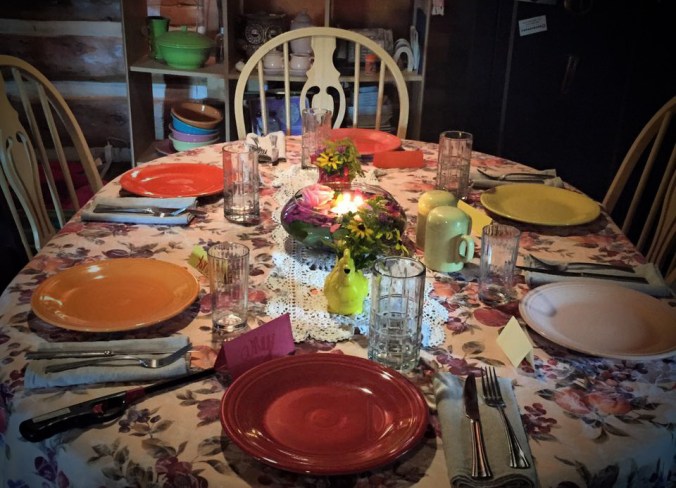
No dining experience is complete without flowers. These wildflowers foraged from our backyard are on-top of my Great Grandmother’s handmade lace doilies. Like our writing, it’s the details that matter.
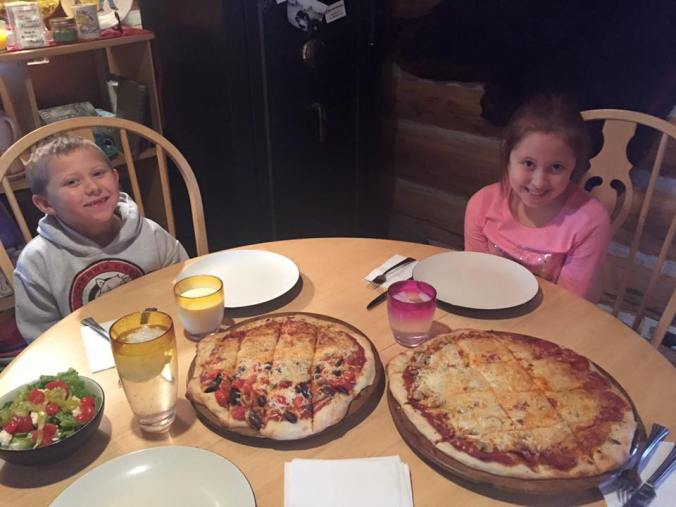
Homemade Pizza Night several years ago.
When my step daughter was younger, she always made place cards for family members.
Candles with roses and blooms from my garden.
My Fiestaware dishes haven’t been used enough recently.
“Creativity is just connecting things. When you ask creative people how they did something, they feel a little guilty because they didn’t really do it, they just saw something. It seemed obvious to them after a while. That’s because they were able to connect experiences they’ve had and synthesize new things.” -Steve Jobs
As a high school writing teacher, I am constantly looking for new ways to help my students find inspiration. While my creative writing students come to class prepared to create, sometimes encouraging my 9th grade English students to tap into their creativity is a challenge. This is especially true when I ask them to write poetry.
To help free up writer’s block and self-doubt, I tell my students that for their first draft I will not assign a letter grade for a poem but will give credit or no credit. If they turn it in, they get a certain number of points and if they do not turn in a poem they get a zero. The only stipulation is that the poem must be approximately twenty lines long. Over the years I have found that this method helps immensely because my reluctant writers do not feel the pressure of completing the “perfect poem”. To my delight, by the end of our poetry unit, many of my students who did not see themselves as writers (or poets) become confident in their ability to experiment with language and record the world with a new genre.
In addition to taking away the pressure of letter grades until they turn in a revised poetry portfolio, I have fashioned a wide array of writing prompts to keep in my teacher toolbox. These prompts serve as a springboard to help generate creative and critical thinking. Many students dislike being assigned a specific subject to write about so I like to keep my poetry assignments wide open and full of potential. I tell my teenage writers that they have poetic license to alter the prompt in any way that they deem fit.
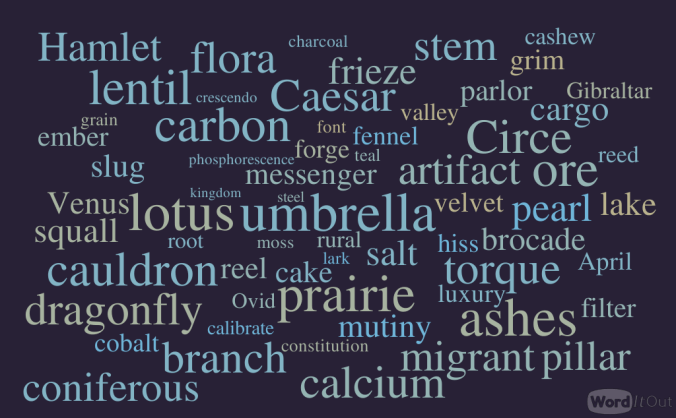
The following assignment is one that I have been employing for at least ten years and it is one that my students have found a lot of writing success. The concept is simple – I supply a word bank and the students use a computer as a tool to help draft a poem. I tell them to choose at least ten words from the provided word bank that they find intriguing (they can change their mind later).
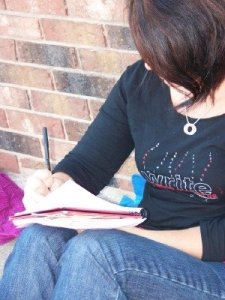
Students who prefer to compose their poems on paper can simply use the computer to look up the words and use a notebook or journal to transcribe their verse.
I then instruct them to use their favorite search engine to look up the chosen words. They may decide to browse a number of sites and add in more search terms to narrow the results (for example: the word pearl may render up the term: cultured pearl. They may then enter cultured pearl into a search engine to conduct some research).
I recommend that they also search images on the computer. This method words well for students who tend to be more visual learners.
The goal is to write a line or two of poetry from each word. As they continue to work their way down the list of words the poem may assemble naturally or they may have to rearrange the lines after. I usually give them two days to work on the poem in class. The first day I encourage them to focus on coming up with a line or two inspired from each word and on the second day to try to string together their lines.
The connections that they make between the words, research, and their experiences is compelling. It is exciting to have the students share their poems with each other and discover that while they were all given the same list of words, they each have their own unique piece of writing.
When I make my word banks I simply use words that I think sound poetic and have promise. An alternative would be to pluck words from a body of work that you are using in class (think Shakespeare, Greek mythology, a novel you are reading) and let the students research and create poetry at the same time. After all, don’t you agree that some of the most productive lessons are ones where we trick our students into learning? I love to hear the phrase, “I really had fun today!” as students trickle out into the hallway when the bell rings.
Since many of my creative writing students take my course multiple times throughout their high school career, I have four different versions of the word bank that I rotate between. Today I will share one of the word banks with you. I will post a printable version below.
Virtual Scavenger Hunt Poem: Word Bank Poetry Prompt
I hope that this post helps inspire your students – or your own writing. I would love to hear back how this activity worked and if you made any modifications.
Thank you for stopping by and helping me create and appreciate a sometimes messy, but always beautiful life. ❤
Somewhere along the way of creating a simple and beautiful life — I have lost my way as a writer. The purpose of this blog is to remind myself that I have to nurture my own creativity. I will be sharing personal stories, fiction, poetry, photographs, and writing prompts in hopes to connect with myself and others who are looking for ways to harness and capture their creative impulses. Thank you for joining me!
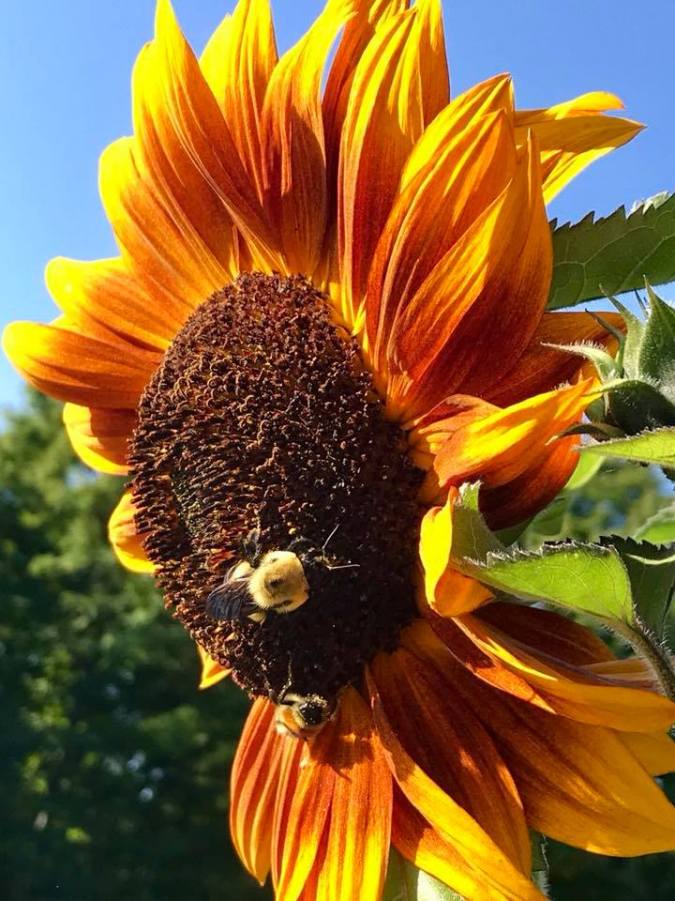
Sunflower and Bee in my backyard.
“Tell me, what is it you plan to do with your one wild and precious life?”









 their way down the list of words the poem may assemble naturally or they may have to rearrange the lines after. I usually give them two days to work on the poem in class. The first day I encourage them to focus on coming up with a line or two inspired from each word and on the second day to try to string together their lines.
 Glitter and Dog Hair