“Together, we all play a role in being change agents to make our world better.” ― Germany Kent
If you read my last blog post, you know that my 9th grade English students spent over a month brainstorming, composing, editing, and polishing up their persuasive writing skills by sending Outrageous Request Letters. They have been in the mail for a little under a month and I confess to obsessively checking my mailbox in the office multiple times per day hoping for responses.
Drumroll please….the first Outrageous Request Letter of the year was granted!
Miss Lila Eagle, wrote to Lakeshore Learning in hopes of receiving 20 wobble stools for her mom, Daniela Eagle’s, classroom. After being a parapro and substitute teacher for ten years, Daniela went back to college to get her teaching certificate and this year was hired to be a special education teacher at GMHS.
Lila wrote the following: “I’m from a small rural town in Upper Michigan called Gwinn, the population of our school district as of 2023 is 1,015. Even though our population is small we have one of the highest rates of students with IEPs or specialized learning plans in the county with 23% of our students having a learning disability. With our school being small we don’t have as much income as other schools in the area leading to us being understaffed and oftentimes we don’t have all of the materials we would like to have…”
“I chose to ask for alternative seating for our classrooms because I think a lot of students would benefit from it. My mom, Daniela Eagle is a Special Ed teacher here at Gwinn and she said that she notices a lot of students not being able to sit still or focus during lessons. With a lot of students with disabilities they can’t focus or they may take longer to do tasks that other students can and need to be moving or fidgeting. With wobble stools students can fidget or keep moving during a lesson and they will be more silent than if they hadn’t had a wobble stool.“
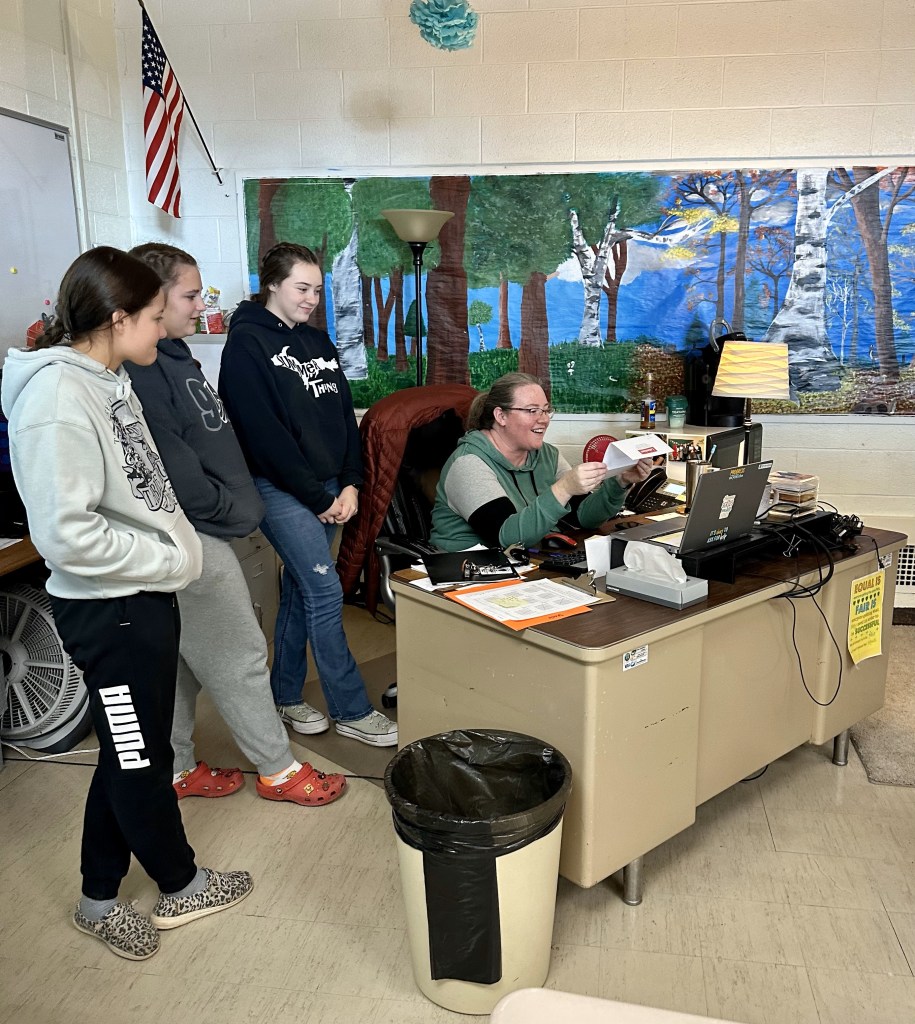
One of my favorite parts of this assignment is mail call. Yesterday at the beginning of the hour I presented Lila with Lakeshore’s letter. The anticipation in the room was tangible as Lila tore open the envelope to read the fantastic news that her wish for 20 wobble stools would be granted. To keep the excitement going, I marched the entire class down to Mrs. Eagle’s room to let her read the letter herself.
As a writing teacher, I cannot imagine a better way to teach students about the power of writing. I hope that Lila feels empowered by this experience. With Lila’s help, students who struggle with sitting still will have alternative seating and will be able to focus on their lessons.
In addition to granting Lila’s request, Lakeshore Learning’s response included the following feedback, “Mr. Kaplan recently reviewed your letter and was very impressed with how much thought you put into your assignment and how well you presented your request. Very persuasive indeed… You have a very bright future and we at Lakeshore wish you continued success.”
I love this photo! What a thrill it was to capture this “Proud Mom and Proud Daughter” moment.
Thank you Lakeshore Learning for giving a hand up to our district and for providing me with the priceless opportunity to teach my students that our words and writing matters. Congratulations, Lila, on using your voice to make your community a better place!
My fingers are crossed for more updates in the coming days. I love my job and I love my students. ❤
“We write to taste life twice, in the moment and in retrospect.” ― Anais Nin
As a writing teacher, one of my mantras is that our writing is a time capsule. I encourage my young writers to use their writing as a tool to reflect on their personal and academic growth. I am always looking for ways to help my students publish their work. Whether it is hanging their poems outside the door of my classroom, finding writing contests for them to enter, or assigning digital compositions that can be widely shared on social media platforms.
However, for many of my students, creating a piece of digital writing can be intimidating. So I came up with an idea to start small. We start by writing a “story” that is exactly one-hundred words long. Before I even assign the digital component, I give them a list of prompts and tell them to choose one and write a piece that is one-hundred words long.
Prompts: Acorn Sewing a quilt Tangerine (lip gloss, curtains, tea, Cadillac) Mason Jar Lightening bugs An object you could not live without What voice do I use to be heard? Monarch butterfly Ice etched window pane Geraniums Unplugged Map Fishing A place where a memory hides/sleeps/waits A favorite sound (last school bell, ocean waves, baby giggling, popcorn) Poetic graffiti Making a fist Wearing a key around the neck Word sprout Three ring binder Pumpkin Unplug Sewing a quilt Hiding place Postage stamp Wrist watch Cappuccino Dirty window or mirror Spark plugs Popcorn Gingerbread house Chocolate milk Alphabet Writing to make sense of the world. Riddle Carburetor Fishing lure Northern Lights Tent Baking bread Five subject notebook You are the hero of your own story What makes me feel alive
After my students have written a story or poem, I give them the digital assignment (along with showing them student samples). They may use the piece that they composed with the prompts that I gave them, or they may choose another theme.
I tell them, “Just like the fact that we all have twenty-four hours a day and must use our time wisely, you have exactly one-hundred words for this assignment. How will you use yours?“
ASSIGNMENT:
Creative Writing: Waldo ~ Fall 2023 Digital Storytelling 100 Word Story
In flash fiction/non-fiction a writer can whittle down narrative and get to the very heart of the story. Flash Fiction or a Flash Non-Fiction attempts to accomplish a complete story in few words, therefore, the language in the piece must become precise and sparse. When we are forced to write within a 100 word frame every word becomes charged with intention and meaning. By combining flash fiction/non-fiction with the digital genre we can add extra layers of meaning with voice, music, and sound effects. Plus, it’s a great way to publish our writing and share our work with others.
Write a story/prose poem that is EXACTLY 100 words.
Come up with a title that goes beyond 100 Word Story (the title does not count in the 100 word total)
Turn your story into a digital piece by creating a video that goes along with the words.
Your video can be a series of still photos. (If you take images from the internet you must give credit to your sources)
You may partner up with another person to help you create this digital piece (but you each must create your own video). You can work with a friend of family member. If you have someone in your life that plays an instrument, creates artwork, or is digital literate you can ask them to help you. Just make sure that you give them credit for their work.
Over the years I have had much success with this assignment. I would like to share with you Sophia’s story.
Sophia is in the 9th grade and the fact that the background music is her playing the piano and that her dad helped filmed the footage – makes the entire composition even more splendid. Bravo, Sophia! I cannot wait to see what other masterpieces you weave with words, melodies, and images this year. #WeAreGACS
“It begins with a character, usually, and once he stands up on his feet and begins to move, all I can do is trot along behind him with a paper and pencil trying to keep up long enough to put down what he says and does.”
― William Faulkner
There is never a dull moment when you work around, and with, teenagers. After teaching high school for two decades, I honestly cannot imagine doing anything else.
A few years ago I learned an important lesson. Never underestimate the power of stickers when it comes to teenagers. One day my 9th grade students were addressing envelopes to mail letters and I offered them stickers to attach to their envelopes. They were delighted and even the unruliest of students became quiet as they intently selected the perfect sticker combination to decorate their correspondence.
This year I had a Donors Choose project funded that included, you guessed it, stickers. A few weeks ago creative writing students were overjoyed when I offered them stickers to adorn their Chromebooks and/or journals. However, first I made them write.
The following was their prompt on Google Classroom:
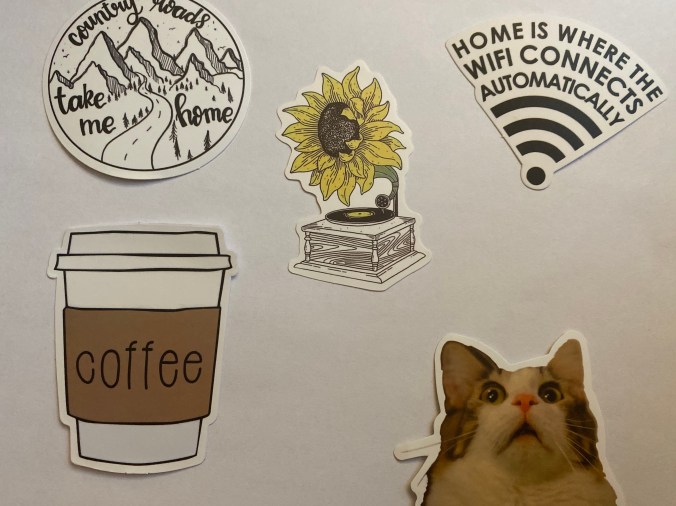
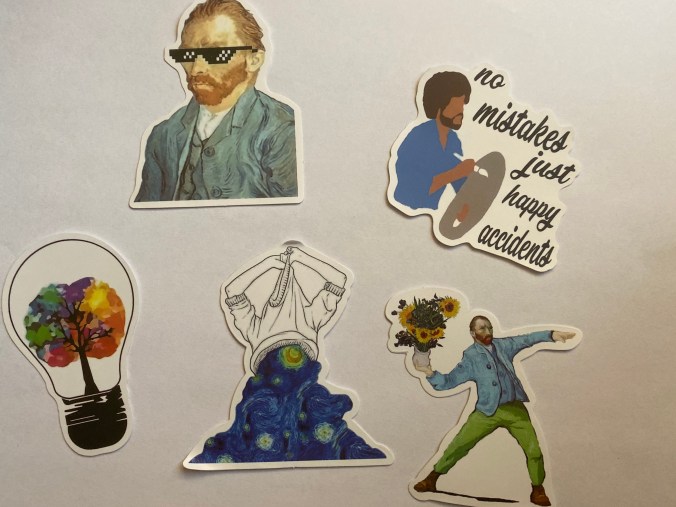
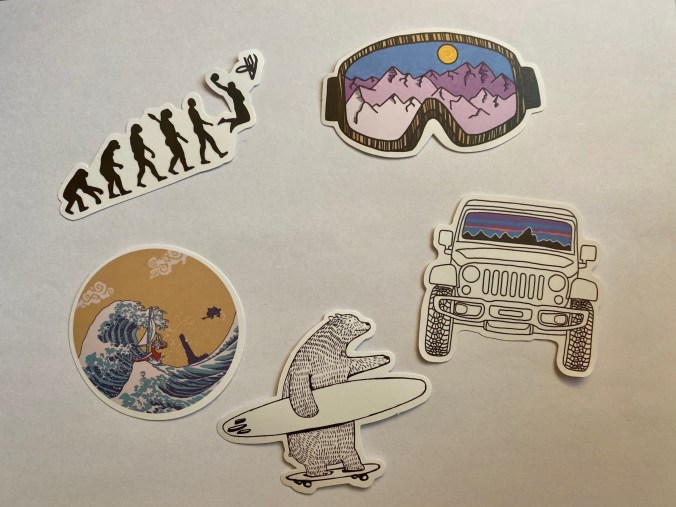
Attached you will find an assortment of images. Choose one of the collections of vinyl stickers and imagine that the stickers are attached to someone’s: computer, water bottle, locker, or another personal belonging. Allow these collection of stickers to tell a story. Imagine what these images say about identity and personality.
I then posted the following images:
The Sweet LifeAll who wander are not lost. Rocket scientist, or bust!Home Sweet HomeStand tall, my dear. Art is life…Adventure Seeker
This prompt works well with students who are visual learners. It provides them with a place to start writing and helps them flesh out a character.
For other teachers reading this, I hope your students enjoy this writing prompt and that it inspires them to be creative. I would love to hear from you in the comment section. As I always tell my students, our words matter.
“Make your characters want something right away even if it’s only a glass of water. Characters paralyzed by the meaninglessness of modern life still have to drink water from time to time.”
― Kurt Vonnegut Jr.
Photo by Julia Zolotova on Unsplash
Today is Thursday, which means it is Focused Free-Write day in my high school creative writing course. Yesterday I posted about how I created a schedule this year to keep our class organized and on-track. With all the challenges we are facing this year due to Covid-19, it feels good to have a little structure – but still have the creative spontaneity that I crave. You can read my post here.
I read Kurt Vonnegut’s quote a few days ago and I thought it would make a wonderful prompt to get a story started. So today my students will use it as a springboard to generate a story – or an episode from a story. After all, not everything we write becomes a masterpiece. Much of what we write is practice. When we write each day we naturally become better writers.
I cannot wait to see where this prompt takes my students. I wonder what their characters will want, or yearn for? Will it be something grand or will it be something as simple as a glass of water?
Maybe your character wants spring to come? Maybe your character hails from a dystopian society and craves freedom from an oppressive government?Maybe your character is overwhelmed and overstimulated and wants peace and solitude.
A mountain cabin? A long hike in nature? Fresh air and birdsong?Maybe your character wants a bowl of soup (or another comfort food) from their favorite restaurant, from their grandmother’s kitchen, or even from their own culinary skills? Maybe they want to become a famous food blogger or open their own cafe?
Write for 20-30 minutes (or longer) and see what happens.
Make sure you follow my Facebook Page and follow me here for more writing prompts.
The world begins at a kitchen table. No matter what, we must eat to live.
The gifts of earth are brought and prepared, set on the table. So it has been since creation, and it will go on.
We chase chickens or dogs away from it. Babies teethe at the corners. They scrape their knees under it.
It is here that children are given instructions on what it means to be human. We make men at it, we make women.
–Joy Harjo
As a writing teacher, I often use food as a prompt to help my students capture their stories. Food is universal and we have an intimate connection to the food that surrounds us.
Not only am I a food blogger, but I think that food helps a writer tap into their senses. Food is smell, taste, sounds, and texture. Food is comfort, culture, community, family, and a way to celebrate and nurture others. It even has historical connections and socio-economic implications.
While there are many emotional associations with food – the places where we congregate to eat also hold the power of stories. Joy Harjo’s poem, Perhaps the World Ends Here, is a powerful companion piece and testament to the importance of the kitchen table.
This is the prompt that I gave my creative writing students this fall (right around Thanksgiving):
The Kitchen Table
Our kitchen tables are a sacred space. A hub where we can gather with loved ones and celebrate in our abundance. In our home, the kitchen table is a verb and not a noun. In our house the kitchen table is a place where our children learn responsibility, and manners; they learn and grow by engaging in conversation, helping prepare meals, setting the table, and helping clean up after. It is also the place where homework is mulled over, canvases are covered with paint, Legos are stacked, manicures are glossed, and dinosaurs are sketched. It is a place where our cell phones and tablets are put away and we give each other our undivided attention. Our table is where we pass the seasons, celebrate in the harvest of our summer garden, and hold family meetings.
Growing up my family embraced visitors at our kitchen table with bottomless cups of strong coffee, homemade baked goods, and as a child it is where I learned to value of the power of stories. At times I was excused, if the conversation was not fit for small ears, but the majority of the time I was a welcome participant in a glorious mix of laughter and a legacy of tales from the past.
The kitchen table is where we mourned the loss of my grandparents, welcomed the hearty appetites of friends who helped my father raise the trusses on our new home, and where my mom fed my teenage friends after the Homecoming dance. It was the where we sustained life.
The center of our families, our homes, and our most treasured conversations occur at the kitchen table. We discuss the vibrant color of sautéed asparagus, the deep laugh of a deceased grandfather; or sit quietly, alone, worrying about our children at 3:00 am.
Write a poem, or narrative, about the metaphorical significance of a kitchen table (or another household object or piece of furniture) using Joy Harjo’s poem, Perhaps the World Ends Here, as inspiration.
Since many of my students have shared that due to busy schedules (sports practice, extra curricular activities, parents working shift work, or family members simply preparing their own food separately and taking to their rooms or other living areas to eat) that they rarely eat together at the kitchen table (though that in itself would make a powerful piece of writing). However, I tell the students they could also write about another piece of furniture or household object: a grandfather clock, a piano, a Mason jar, or a rocking chair.
If you found inspiration from this prompt for yourself or your students, please let me know!
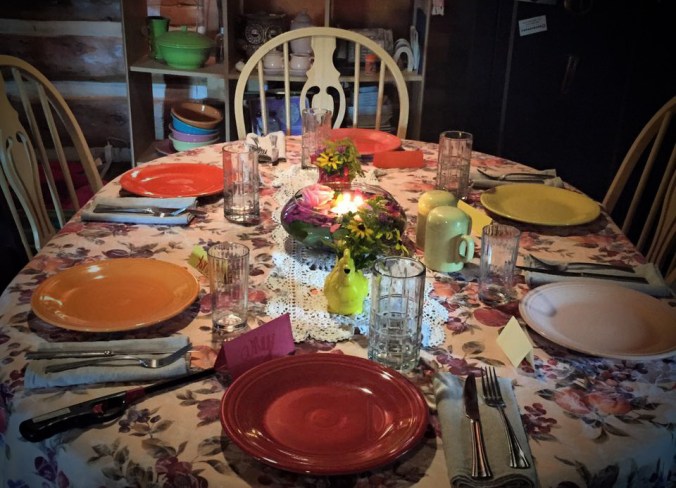
No dining experience is complete without flowers. These wildflowers foraged from our backyard are on-top of my Great Grandmother’s handmade lace doilies. Like our writing, it’s the details that matter.
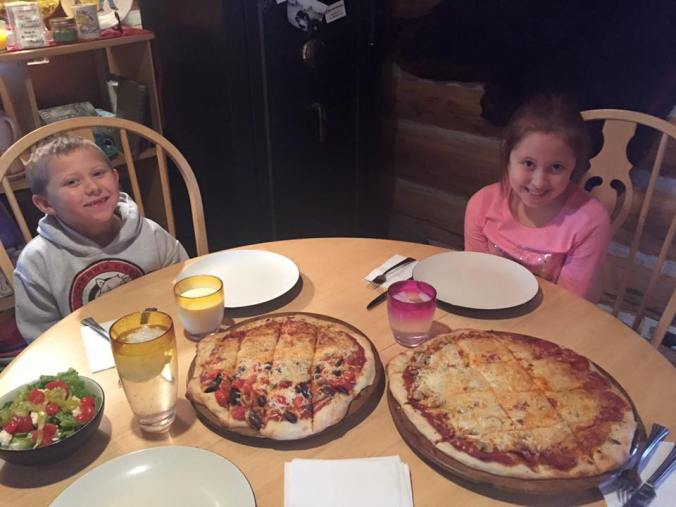
Homemade Pizza Night several years ago.
When my step daughter was younger, she always made place cards for family members.
Candles with roses and blooms from my garden.
My Fiestaware dishes haven’t been used enough recently.
“Creativity is just connecting things. When you ask creative people how they did something, they feel a little guilty because they didn’t really do it, they just saw something. It seemed obvious to them after a while. That’s because they were able to connect experiences they’ve had and synthesize new things.” -Steve Jobs
As a high school writing teacher, I am constantly looking for new ways to help my students find inspiration. While my creative writing students come to class prepared to create, sometimes encouraging my 9th grade English students to tap into their creativity is a challenge. This is especially true when I ask them to write poetry.
To help free up writer’s block and self-doubt, I tell my students that for their first draft I will not assign a letter grade for a poem but will give credit or no credit. If they turn it in, they get a certain number of points and if they do not turn in a poem they get a zero. The only stipulation is that the poem must be approximately twenty lines long. Over the years I have found that this method helps immensely because my reluctant writers do not feel the pressure of completing the “perfect poem”. To my delight, by the end of our poetry unit, many of my students who did not see themselves as writers (or poets) become confident in their ability to experiment with language and record the world with a new genre.
In addition to taking away the pressure of letter grades until they turn in a revised poetry portfolio, I have fashioned a wide array of writing prompts to keep in my teacher toolbox. These prompts serve as a springboard to help generate creative and critical thinking. Many students dislike being assigned a specific subject to write about so I like to keep my poetry assignments wide open and full of potential. I tell my teenage writers that they have poetic license to alter the prompt in any way that they deem fit.
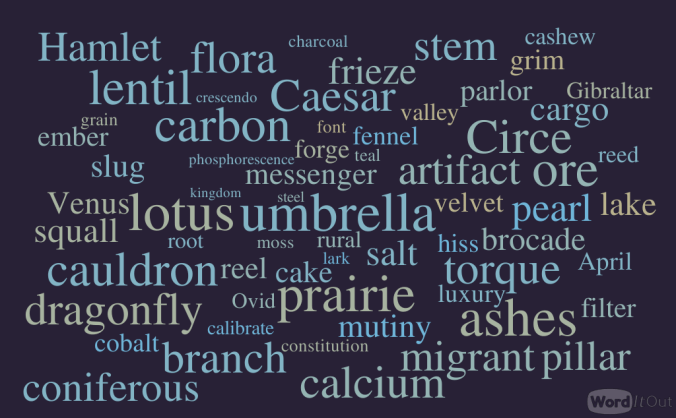
The following assignment is one that I have been employing for at least ten years and it is one that my students have found a lot of writing success. The concept is simple – I supply a word bank and the students use a computer as a tool to help draft a poem. I tell them to choose at least ten words from the provided word bank that they find intriguing (they can change their mind later).
Students who prefer to compose their poems on paper can simply use the computer to look up the words and use a notebook or journal to transcribe their verse.
I then instruct them to use their favorite search engine to look up the chosen words. They may decide to browse a number of sites and add in more search terms to narrow the results (for example: the word pearl may render up the term: cultured pearl. They may then enter cultured pearl into a search engine to conduct some research).
I recommend that they also search images on the computer. This method words well for students who tend to be more visual learners.
The goal is to write a line or two of poetry from each word. As they continue to work their way down the list of words the poem may assemble naturally or they may have to rearrange the lines after. I usually give them two days to work on the poem in class. The first day I encourage them to focus on coming up with a line or two inspired from each word and on the second day to try to string together their lines.
The connections that they make between the words, research, and their experiences is compelling. It is exciting to have the students share their poems with each other and discover that while they were all given the same list of words, they each have their own unique piece of writing.
When I make my word banks I simply use words that I think sound poetic and have promise. An alternative would be to pluck words from a body of work that you are using in class (think Shakespeare, Greek mythology, a novel you are reading) and let the students research and create poetry at the same time. After all, don’t you agree that some of the most productive lessons are ones where we trick our students into learning? I love to hear the phrase, “I really had fun today!” as students trickle out into the hallway when the bell rings.
Since many of my creative writing students take my course multiple times throughout their high school career, I have four different versions of the word bank that I rotate between. Today I will share one of the word banks with you. I will post a printable version below.
Virtual Scavenger Hunt Poem: Word Bank Poetry Prompt
I hope that this post helps inspire your students – or your own writing. I would love to hear back how this activity worked and if you made any modifications.
Thank you for stopping by and helping me create and appreciate a sometimes messy, but always beautiful life. ❤
“Don’t scorn your life just because it’s not dramatic, or it’s impoverished, or it looks dull, or it’s workaday. Don’t scorn it. It is where poetry is taking place if you’ve got the sensitivity to see it, if your eyes are open.” –Philip Levine, describing what he learned from William Carlos Williams
A shelf in my classroom with Monet reproductions.
Mrs. Sherby was my art teacher in both elementary and secondary school and I will never forget the lessons she taught at the Forest Park Schools. I still dream about her classroom – the way the clay smelled, the wide-narrow drawers where we stored our work-in-progress, and the baby food jars where we mixed custom colors of acrylic paint and dipped our paintbrushes.
Mrs. Sherby taught us about the Impressionism Movement and I was moved by Monet. I vividly remember learning about his haystack series and the way he patiently painted during different times of the day to observe and transcribe natural light. What an impact it made on me to realize that a single landscape scene could take on different appearances based on the time of the day and the quality of light. It is a lesson that has never left me.
My boyfriend Matt, freshman year in college at Marquette University, took me to see a Monet exhibit at the Chicago Art Institute and it was a transformative experience. Looking back I realize how painfully naïve I was from my rural upbringing. I gapped, wide-eyed and astonished at how large the canvases were. The layer-upon-layer of paint were exactly as Mrs. Sherby had described them in one of her slide show presentations. I was moved so deeply that I wanted to touch the canvas in front of me. Without thinking, my hand stretched out to one of the paintings to feel the texture of Monet’s brush strokes and I was chided by one of the docents. Though nothing could interrupt the experience for me. I was transfixed. It may seem dramatic, but my world was forever changed. I had come face-to-face with a masterpiece and I felt the spirit of Monet with every step that I took. As a teacher, I hope that something discussed in one of my classes sticks with a student so permanently that they add it to their bucket list.
As a writer, and a teacher of writing, I believe that we must experience the world with the sensibility that other artist’s do. For our craft we also study light as attentively as Monet did. Writing is an image rich process and it also must engage all of our senses.
My students are used to hearing me lecture that as writer’s we notice things that other people do not. We listen to conversations with our ears finely tuned to accents and word choice and experience color and sound in a way that approaches their essence. We constantly ask ourselves, how would we describe the way a high school hallway swaggers with students after the bell rings? Or more accurately, how would I show my reader?
I often have my teenage writers take abstract terms such freedom, love, and happiness and describe them in terms of our senses to make them concrete. What does freedom smell like? What does happiness taste like? What color is love? The true test for a writer is turning the abstract into something concrete so the reader has a sensory experience.
In my last post, Writer’s Block? Mine the Richness In Your Own Backyard, I shared how I have spent my winter snowshoeing around our homestead. Ironically, while I am a native of the Upper Peninsula of Michigan, I have never been fond of winter. That was until I started snowshoeing. While my primary goal is exercise and stress relief, I cannot help feeling that I am “Filling the Well” to borrow a phrase from Julia Cameron’s, The Artist’s Way.
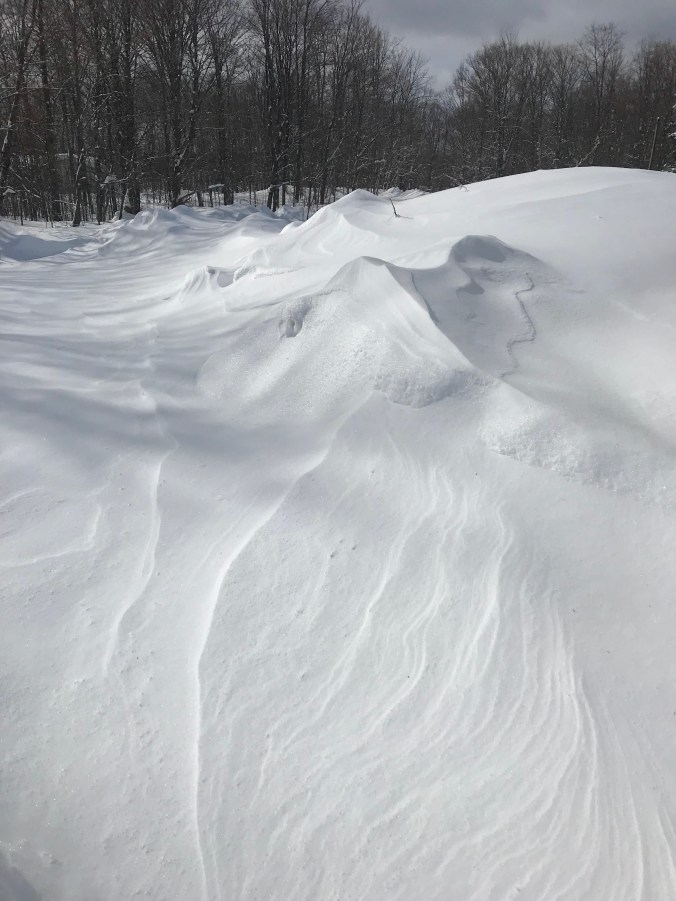
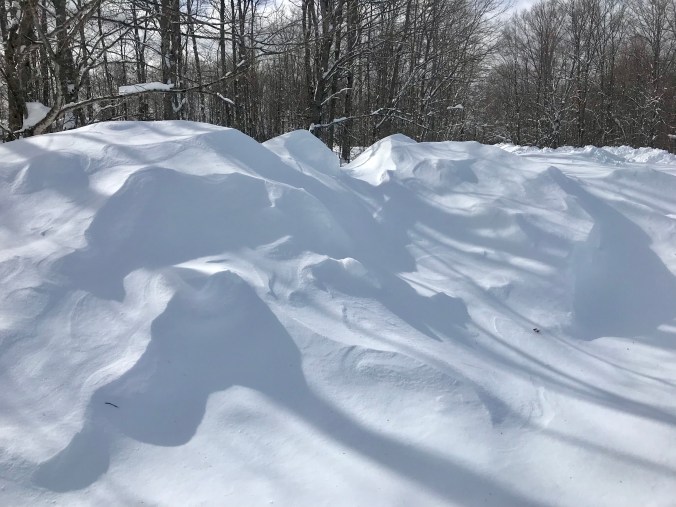
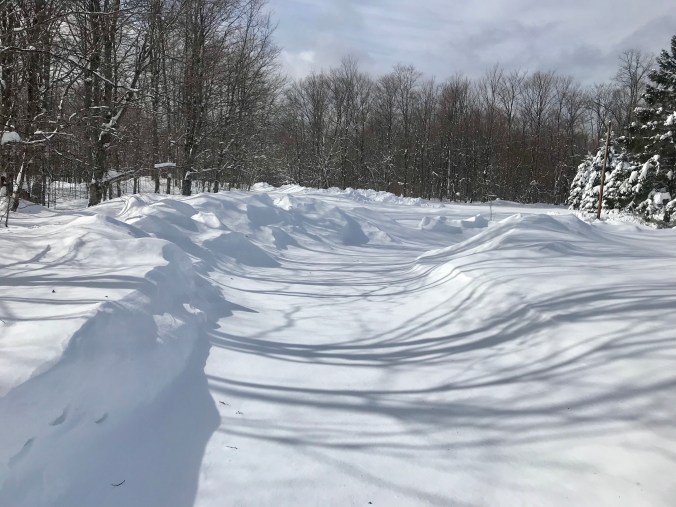
When I strap my snowshoes on to burn hundreds of calories, I am also tuning in, memorizing, and categorizing colors, sounds, shapes, fragrances, and textures. It’s true, I even snowshoe with the sensibility of a writer. While I am trudging through the snow I am keeping a deft eye on the landscape, and even though I usually stick to the same path, every day the scenery is different. The snow is never the same shade of white and even the snowbanks are malleable and are shaped by the elements. One day they are choppy from plowing and the next day the peaks are smoothed by the wind like a piece of Lake Superior beach glass tossed by the waves. One day the snow is a flawless, glistening sheet and the next day the surface of the snow wears sparkling grooves and flowing ripples.
Ripples in the surface of the snow caused by the driving force of a wind storm.
The snowbanks were both chiseled and worn smooth by the wind.
The shadows cast from a sun storm accentuate the fluid curves.
The same stretch of banks may look completely different tomorrow.
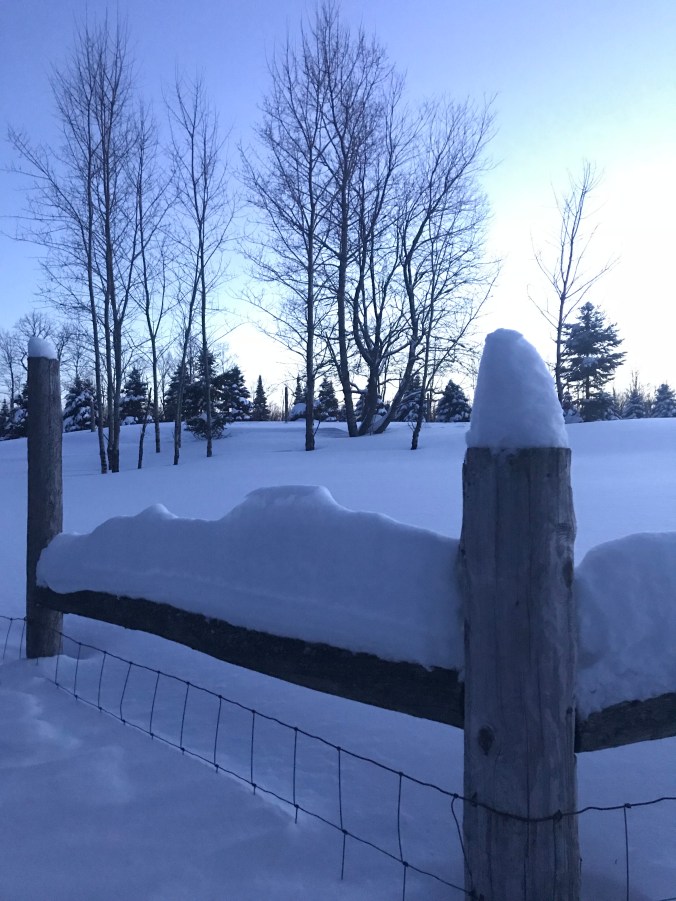
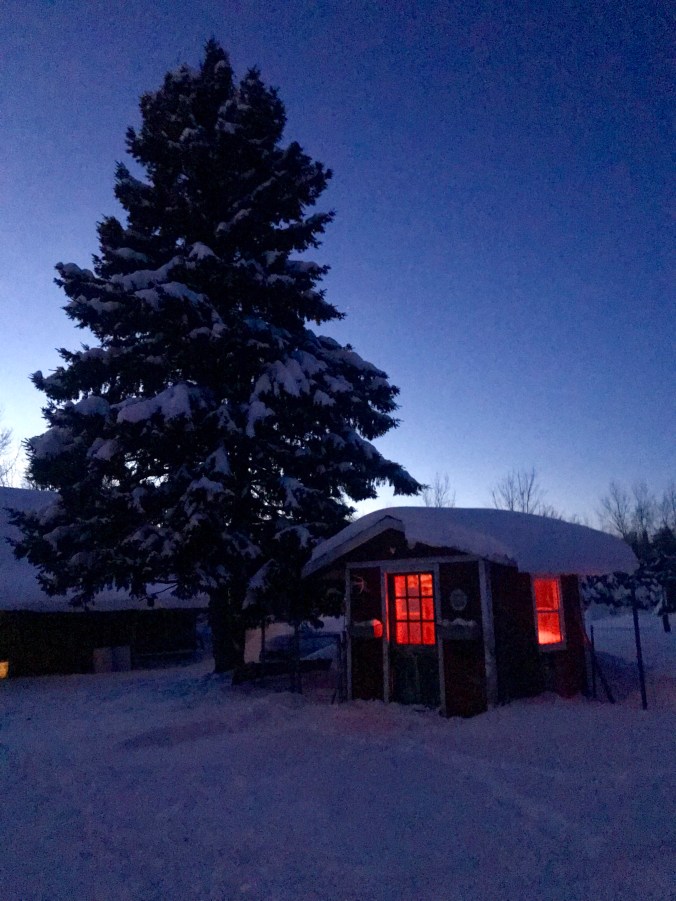
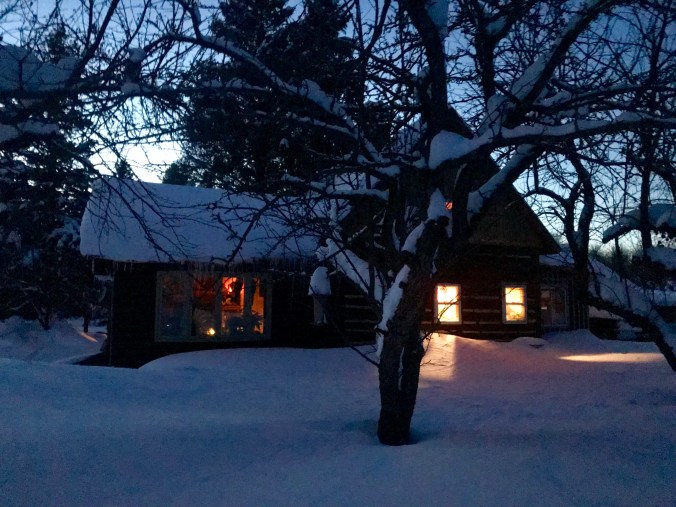
As a writer I have what I call my, “Monet Moments”. When I want to experience the world with a new lens. Mid-February I was watching the blues set in at night (on many levels). I wanted to snowshoe at dusk to experience the optical effects of light up close and personal and not just from the mudroom window. I have a trail carved around our pasture and approximately three and a half times around is a mile.
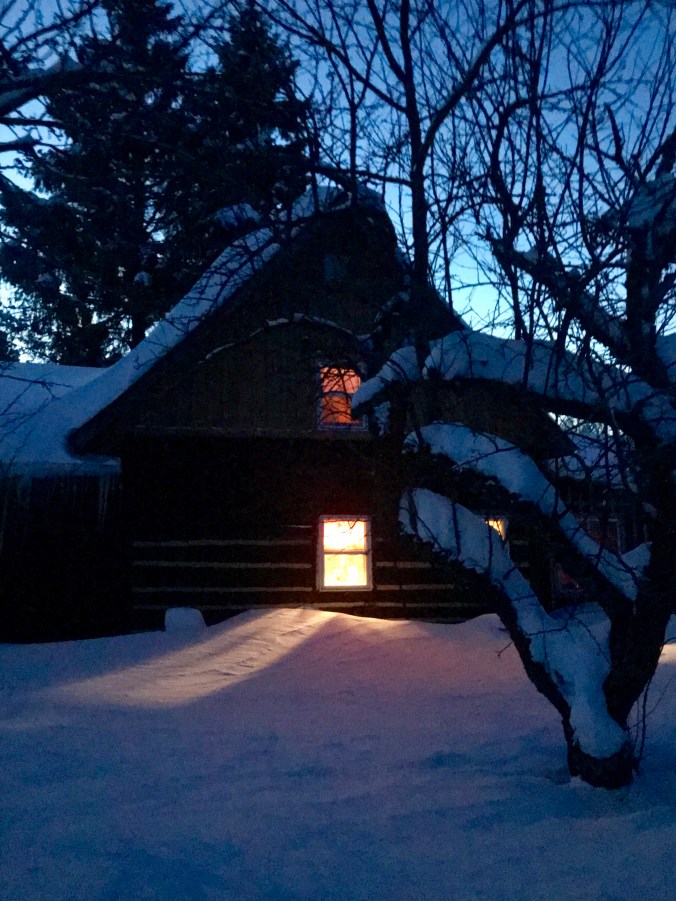
One night when I set out, the sky was blushing a sheer rose with a hint of lavender. Within minutes every snow covered surface was cast with an ethereal blue tint. It was the same trail that I frequented daily. However, on most nights I snowshoe after dinner and since it gets dark early I wear my headlamp. On this particular evening, I wanted to live with intention and experience a moment in tune with nature. While the purple and blue quickly faded, I could not help marveling in what a beautiful world we live in.
Our pasture becomes a canvas of ice blue.
Moonlit Blues
When sky, snow, and February meet.
Snow dunes.
Chicken Coop
The blues of February set in dark and deep. Winter’s heart. Blue veined shadows throb across snowbanks. An ancient voice glistens like gaudy sapphire jewels to stare me down. A deep and sacred silence. Bare branches shiver with faceted sparks hinting at spring’s promise. Ushers of hope. Indelible moment. Winter’s bruised paradox.
When my students roll their eyes when I assign a new piece of writing, it is my job to try to convince them that they will rewarded for their efforts and that what they gain goes far beyond a grade that I assign. I acknowledge that I understand writing is work – it takes patience and diligence. Not everyone in my classroom will publish poems or novels and aspire to become a teacher, professor, professional writer or a blogger. Yet, viewing the world – as a writer – trains us to experience the world differently. It forces us to pay attention. Once our senses are opened as a writer – they can never be closed again and that makes us more astute, sensitive, and engaged human beings. Becoming a writer means looking at the ordinary and everyday things in our life through a magnifying glass. As human beings we are immersed in communication and writing helps make our thoughts tangible. This act of creation becomes as individual as our fingerprint.
I think in the age of digital technology, where much of our lives are dominated by screen time, that engagement is more important than every before. We are so focused on instant gratification that we have forgotten to step back and appreciate. To watch and wait. We neglect to see the nuances that the world offers up. I am thankful that I saw myself as a writer at a young age because it has helped me to find my balance and focus on the positive even during challenges and struggles. It has helped me become a seeker of beauty and wisdom and has taught me to look for patterns and see that everything in the world is connected.
My writing challenge to you over the next few days is to participate in a commonplace activity with the sensibility of a writer and artist. Whether you are baking bread or taking your dog for a walk – open up your senses. Leave your cell phone behind so you can have an uninterrupted experience or use it as a writing tool to capture images (sometimes taking a photo gives us an excuse to stop and focus). When you are out in public eavesdrop and listen to conversations. Listen to an individual’s diction and the melody of laughter. Watch the sun cast shadows and the play of branches on a snowbank, building, or sidewalk. Wake up early on the weekend and watch the sun rise blister the sky with color. Pay attention to how nimbly the horizon washes into new hues as it dissolves into pale morning light. Take a walk at dusk or at twilight. Fill your creative well and make discoveries about both humble and pretentious spaces and things. When you are a writer your practice is portable and your writer’s sensibility goes wherever you go.
Who knows, like me, you may make the revelation (after forty-seven years) that there is beauty where you least expected it — such as in the mid-winter blues of February. The writer in me is thankful for the experiences that I had as a teenager that shaped me. Such as art teachers like Mrs. Sherby and the paintings of Monet.
I would love to hear from you as you bear witness to your creative spark. What has inspired you recently? What fuels your inner artist? What is a lesson that you have learned about writing? Please share your insight and wisdom.
Do not forget to check out my sister blog where I share healthy lifestyle tips and recipes: Produce with Amy












 their way down the list of words the poem may assemble naturally or they may have to rearrange the lines after. I usually give them two days to work on the poem in class. The first day I encourage them to focus on coming up with a line or two inspired from each word and on the second day to try to string together their lines.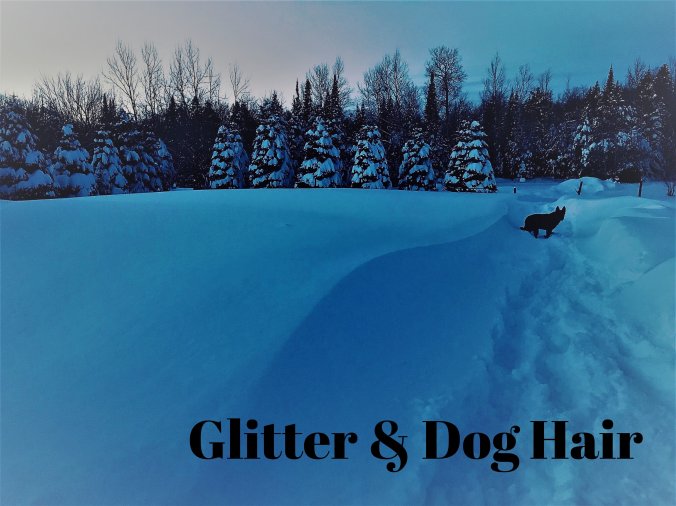




 Glitter and Dog Hair